
Direct answer
Because a quote written from a floor plan is a guess, and the things that move the number most are the things a floor plan does not show: whether the ceiling has rigging points, where the power actually is, how far the dock is from the room, and what the venue will not let you do. A company that quotes without asking is either padding the number to cover what it does not know, or is about to find out on your budget. The call takes about 20 minutes for a small show and closer to an hour for a large one, and more often than not it takes cost out rather than putting it in.
What the site visit is actually looking for
Six things, none of which appear on a floor plan:
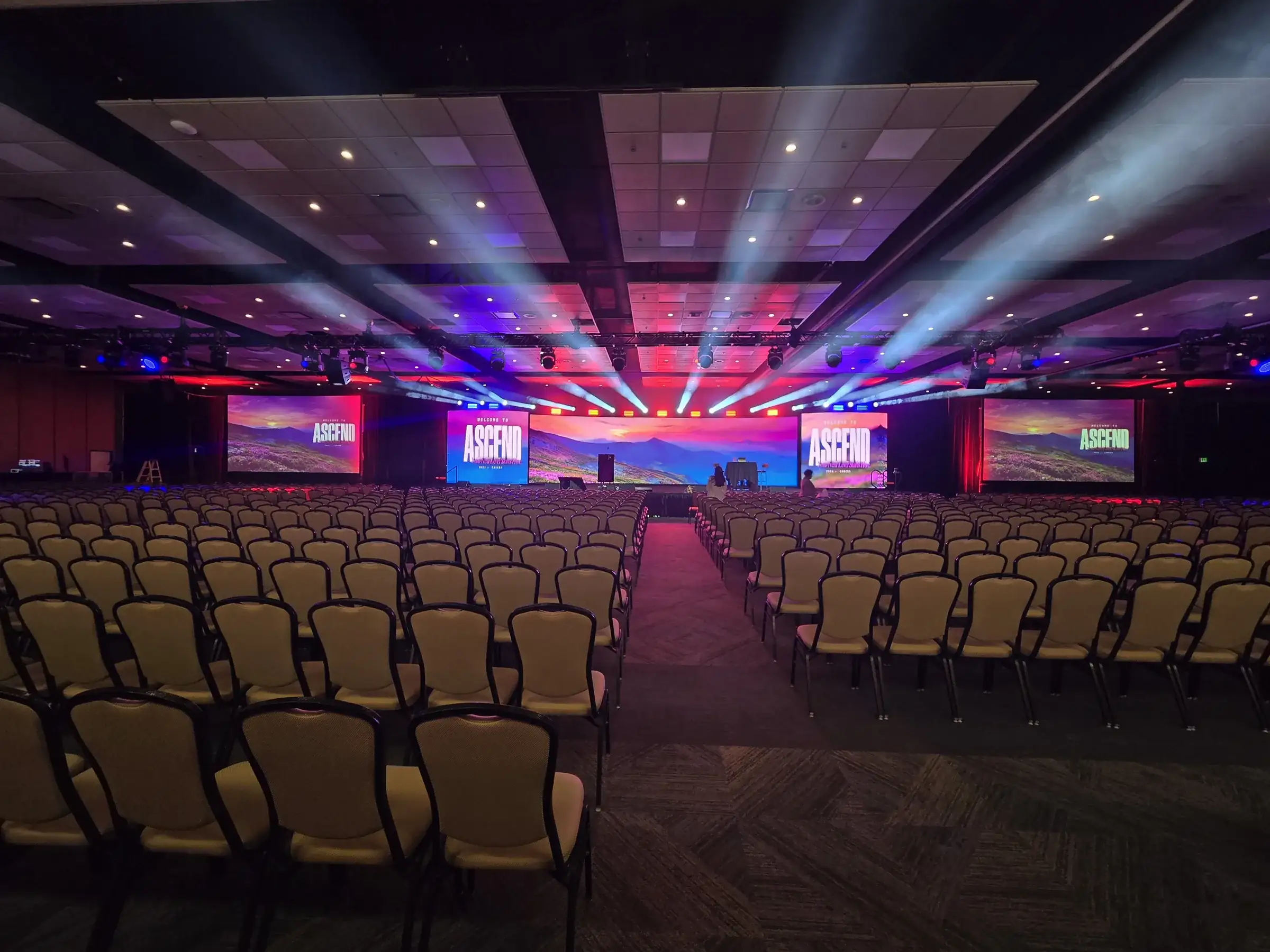
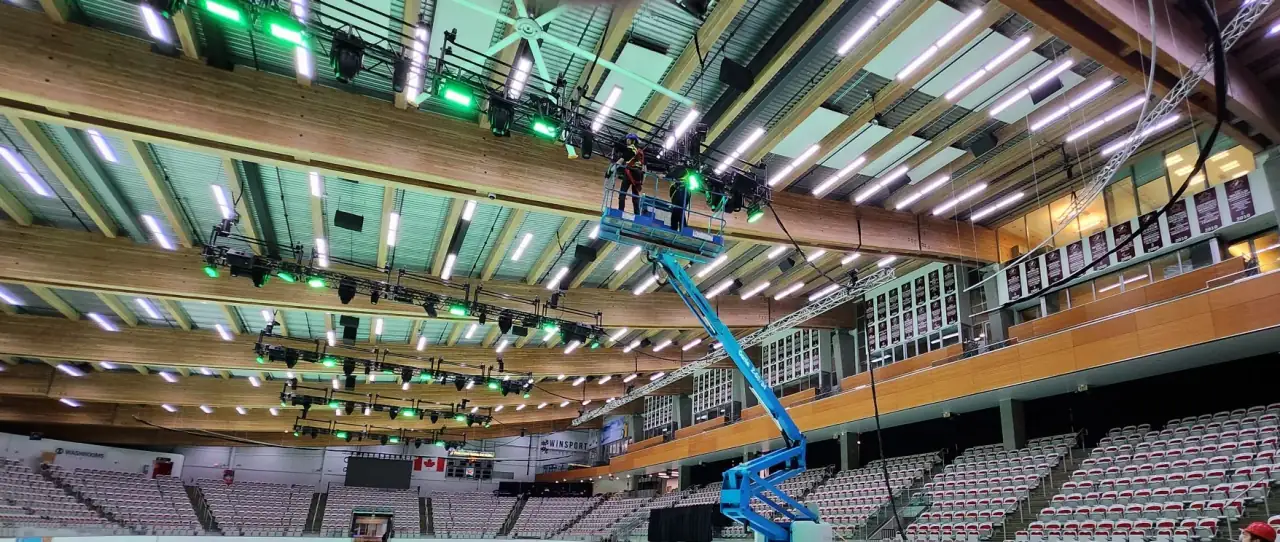
- Rigging points. Whether anything can be hung from the ceiling, where, and what the venue charges per point. This single answer can change the whole design.
- Power. How much, and where. A room with one 20-amp circuit at the back wall is a different event from the same room with three-phase at the stage.
- Dock to room. Distance, lift access, door widths, and stair counts. Every one of those is crew hours.
- Access restrictions. Union requirements, quiet hours, elevator bookings, and what time you can actually start.
- Whether lifts are needed. Ceiling height decides this, and lifts bring their own operator and certification requirements.
- Internet and networking. Whether the house bandwidth will carry a stream, and whether you are permitted to bring your own.
Why two events that look identical price differently
Same venue, same headcount, different event. The variables that move it:
- Room layout and how the audience is seated
- What the presenters need, and how many of them there are
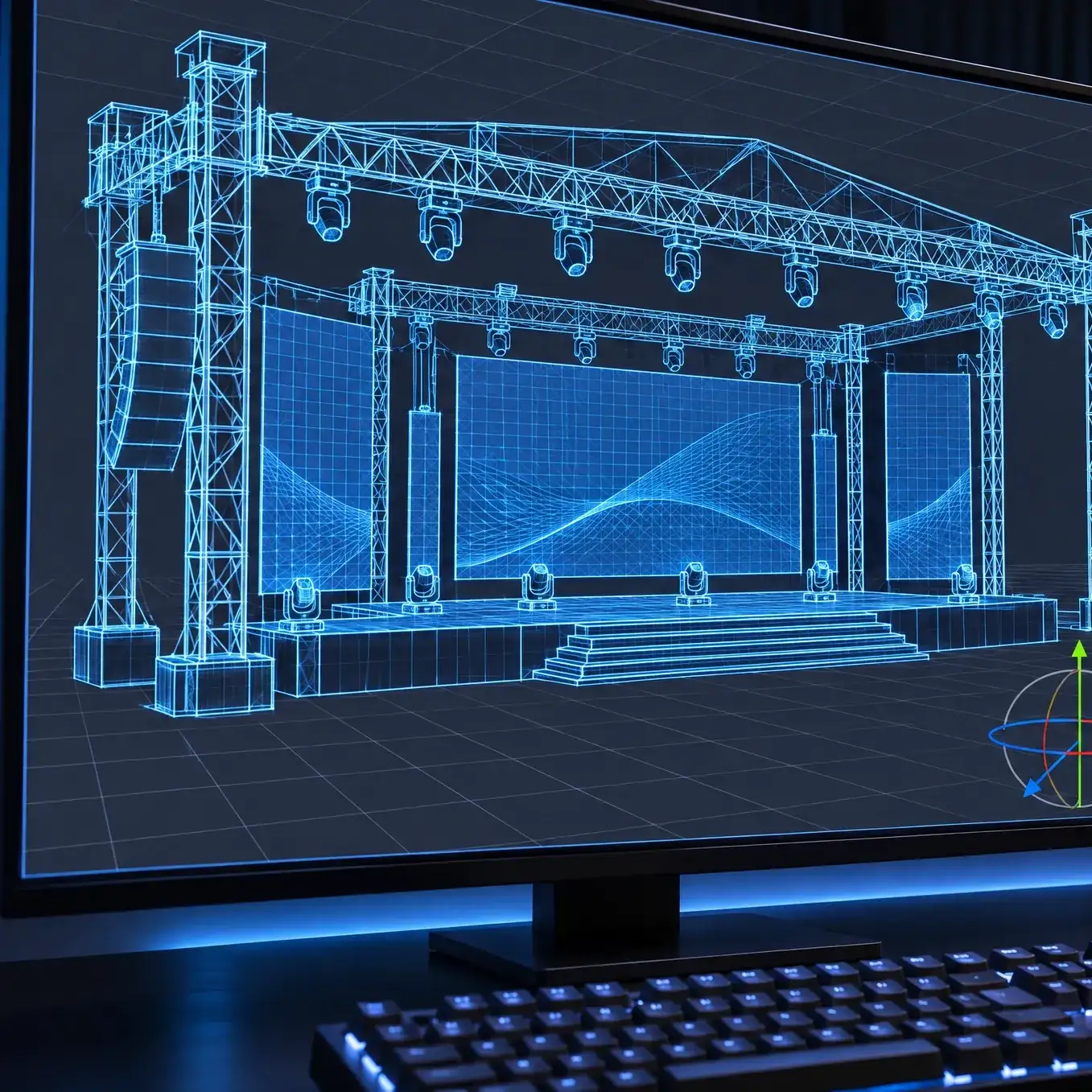
- Staging configuration
- Whether the lighting has to look like anything, or only has to work
- How much video content there is, and who is making it
- Whether it is recorded, streamed, or both
- The load-in and load-out windows the venue will give you
Change any one of those and the design changes with it.
The call usually takes cost out
This is the part clients do not expect. A discovery call is not a sales technique for enlarging the quote. An experienced company will often find:
- Equipment on your list that your event does not need
- A simpler approach that gets the same result
- Venue resources already available to you, at no extra cost
- An alternative that fits the budget you actually have
None of that is findable from an email describing the event in a paragraph.
What to bring so the call is short
If you want the fastest possible turnaround, arrive with the date, the venue and the specific room, the headcount, a draft agenda, whether anything has to be recorded or streamed, and your load-in window. That is usually enough for a real number.
Our take
Some of the most expensive mistakes in this business come from rushing to a quote before anyone understood the event.
When a client asks for a price early, that is completely understandable. You have a budget to build and a board to answer to. But handing over a number without knowing the event does you no favours. It is the number that changes later, and it always changes in one direction.
Look for a company that asks questions first. Who is the audience, what is the room doing, what does success look like on the day. Clients are rarely trying to rent equipment. They are trying to run an event that works.
In live events there are no practice games. The audience does not know or care whether a problem started because somebody skipped a site visit. They only see the result.
The bottom line
If a company asks for a discovery call before quoting, that is not an obstacle. It is the first evidence you have that they take the job seriously.
What you are buying is planning, project management, and crew who have worked the room before. The equipment is one line in that. The companies that ask the most questions at the start are usually the ones still standing at the end.