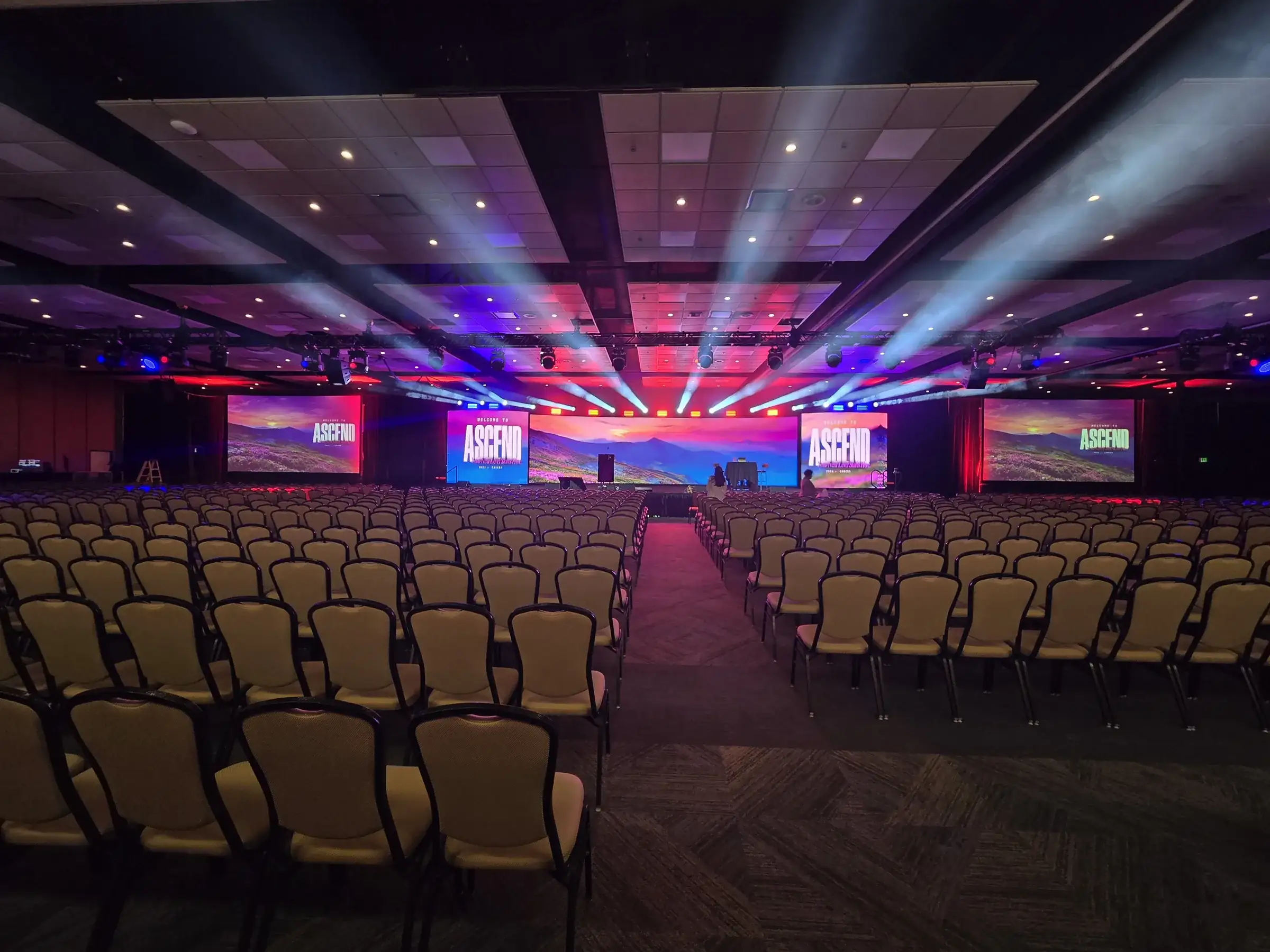





A town hall starts with the room and the people in it, not with a list of gear.
For a town hall or AGM, SW likes to start with the room and the audience, not the equipment list. We want to know how many people are expected in attendance and whether anyone is joining remotely. The room layout decides the equipment list we recommend, followed by how many people need microphones. From there, SW can build a proposal to make sure everyone can see, hear and participate.
What goes into the room
- Expected attendance layout
- Stage size and location
- Main screen sized for the room
- Presentation computer including video playback
- Confidence monitor
- Wireless handheld microphones depending on the format
- Lavalier or headset microphones for presenters who need hands-free delivery
- Dedicated audio system
- Podium if required
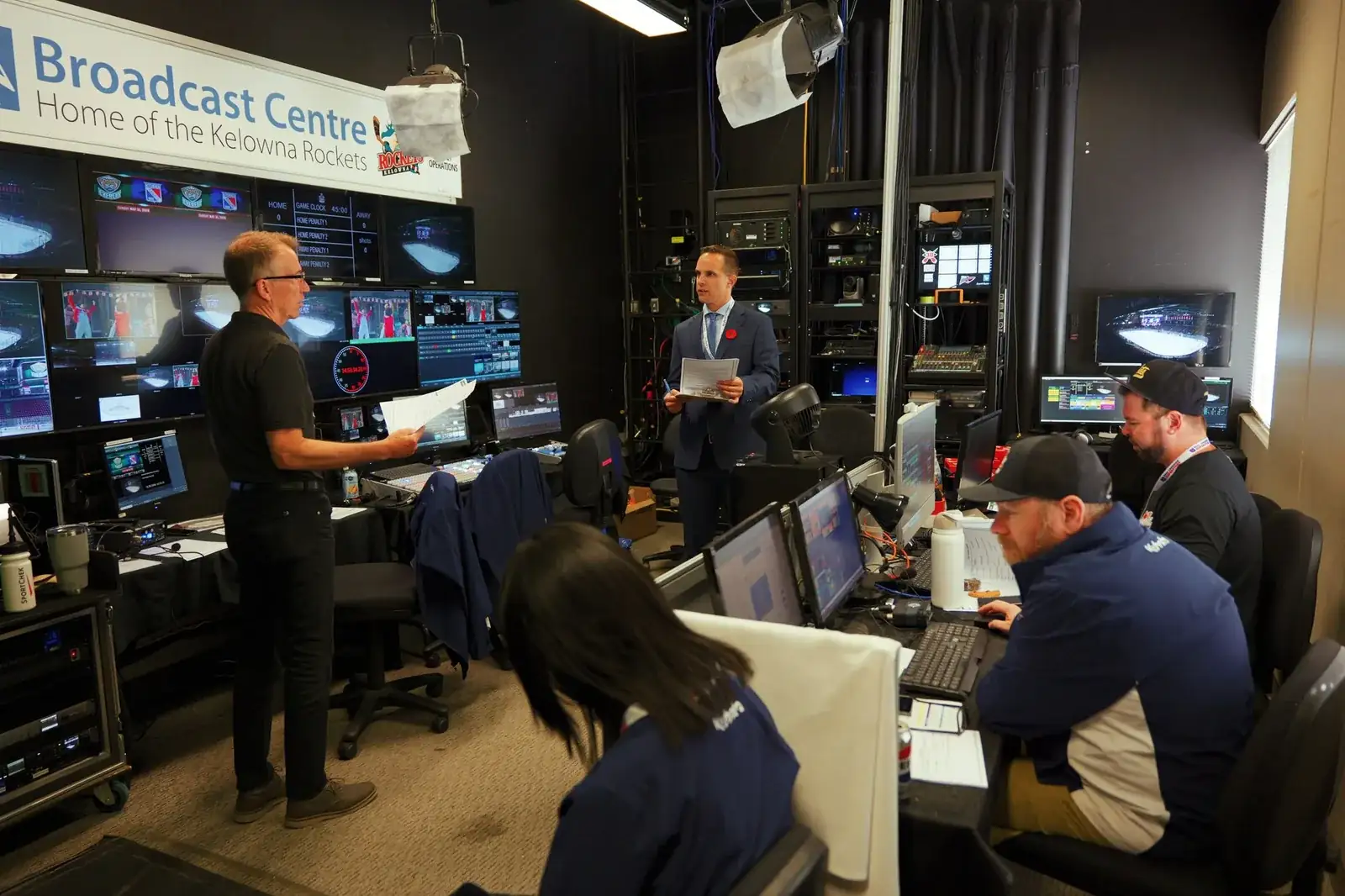
- Camera and streaming package if remote attendance is involved
- Technician on site for the presentation, audio and video
- Content supplied and tested before the event
- Full technical rehearsal before doors open
The venue's half of the list
Some of what a town hall needs is not equipment at all. It is answers from the building. A venue checklist published by Convene names seven things to settle with the property: Wi-Fi, the presentation display, audio that covers the room, live streaming capability, filming and recording, on site technical support, and backup planning (Hilary Braseth, "A Meeting Planner's Venue AV & IT Checklist," Convene Catalyst, December 7, 2016). Convene is a venue company writing about its own category, and the piece is from 2016, so its display advice predates LED walls being ordinary. As a list of what to ask the building, it holds up.
Its audio note is the one worth putting in front of every planner: "In-room speakers need to have a volume consistent enough to be heard in the far left corner, and room doors need to be insulated well enough to muffle the sounds outside." The same piece flags dead zones as common, and notes that more than a few microphones "typically require a channel mixer." Four microphones is not four microphones. It is four microphones and something to mix them through, run by somebody who is listening.
Wi-Fi is a production input
Convene's line on this has aged well: "WiFi has become just as important as great coffee and clean bathrooms when keeping your event participants happy." Its two questions matter for a streamed town hall. Is another event sharing the same network that day, and is there a redundant backup network. If the meeting is being streamed to staff at home, the connection carrying it is production infrastructure and not an amenity, and it needs to be specified, tested, and ideally separate from the guest network everyone in the room is using.
Microphones for the people who are not on stage
A town hall is defined by the questions. The bullets above cover the presenters, and the harder problem is the room. Somebody has to get a microphone to a person in row 14 before the moment dies, which is a staffing decision as much as an equipment one. Two runners with handhelds behaves completely differently from one aisle stand that people have to queue at, and neither is wrong. What is wrong is discovering at the meeting which one you have. Decide whether questions come from the floor, from a stand, from cards, from a moderator reading them, or from all four, then count microphones against that.
If the meeting has to be on the record
An AGM is not just a town hall with a longer agenda. There is usually a formal layer underneath it: quorum, proxies, motions from the floor, and votes that have to be recorded properly. That layer belongs to your corporate secretary or your counsel rather than to your AV supplier, but it lands directly on the equipment list, so it needs settling early. The questions worth putting to them are whether any part of the meeting has to be recorded, whether anyone speaking to a motion has to be audible on that recording, whether remote attendees are voting and through what, and whether the chair needs to see anything from the platform in order to run the meeting. Answers to those change microphone placement, the recording path, and sometimes the whole room layout.
How long anyone watches a streamed town hall
If people are joining remotely, the agenda is competing with their inbox. ON24's 2024 platform benchmarks put average live engagement at 53 minutes and registrant to attendee conversion at 56 percent (ON24, 2024 Digital Engagement Benchmarks); its 2025 report puts average live engagement at 49 minutes (ON24, Webinar Benchmarks 2025). Those describe ON24's own platform and a B2B webinar population, so they are benchmarks rather than an industry survey. They are still a reasonable argument for keeping the streamed portion of a town hall inside an hour, putting the material you most need people to hear early, and holding the parts that only concern the room until after the stream has been released.