
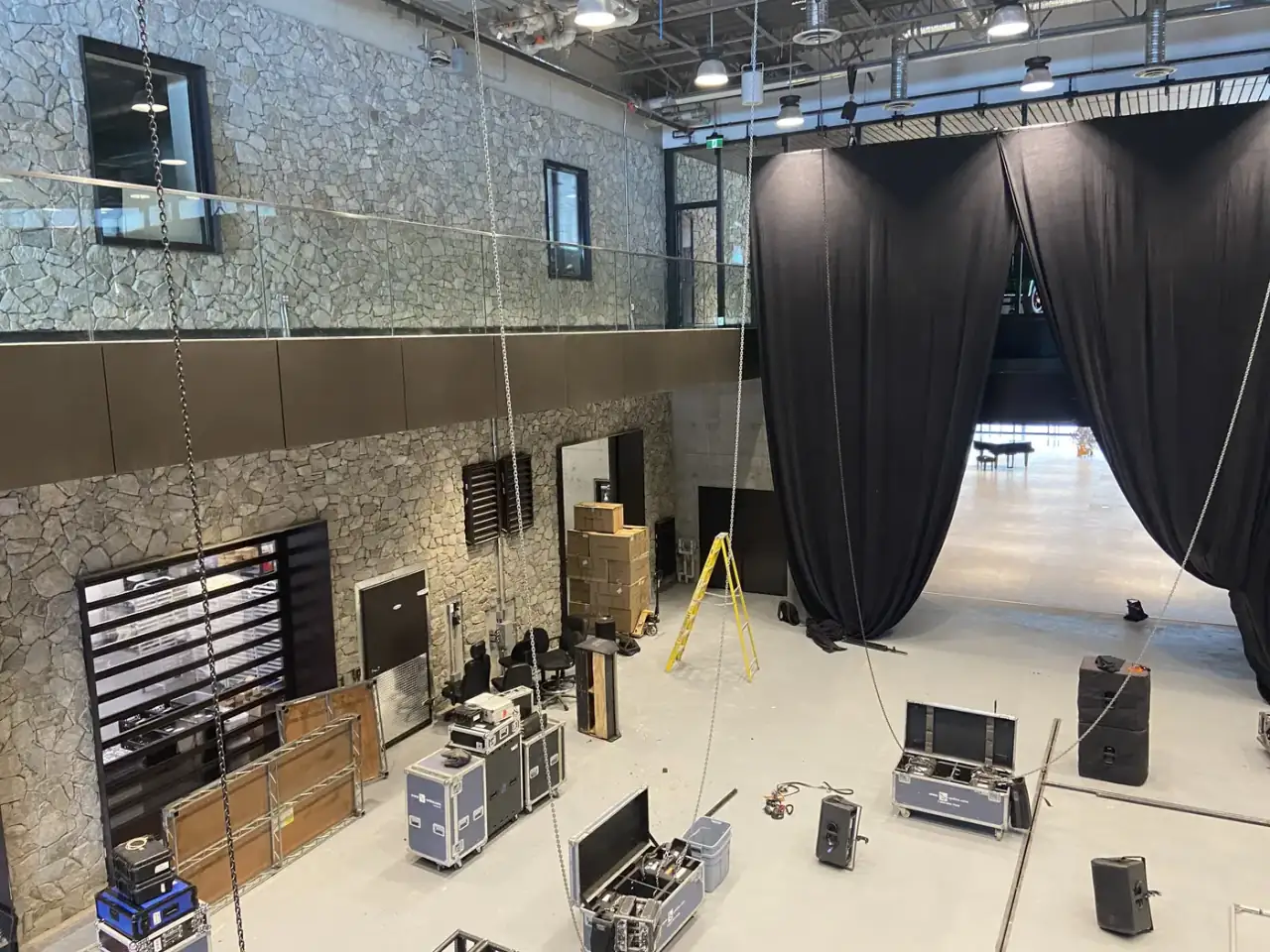
Most venue contracts are signed on capacity, catering, and price. The technical questions get asked later, usually by the supplier, usually after the deposit has gone.
That order is backwards, and it is expensive in a specific way: every technical limitation discovered after signing has to be solved rather than avoided. Solving costs money. Avoiding is free, and it takes eight questions.
None of these require a technical background to ask. You are collecting answers, not evaluating them.
1. Where does the power come in, and how much is there?
Ask for the service size and the physical location of the tie-in point. A room with plenty of power at the wrong end of it still means a long, expensive cable run, and in some buildings it means a licensed electrician on site.
A vague answer usually means nobody has been asked recently. Ask who the building's electrician is, and whether a tie-in needs their attendance.
2. Can we hang anything from the ceiling, and who says yes?
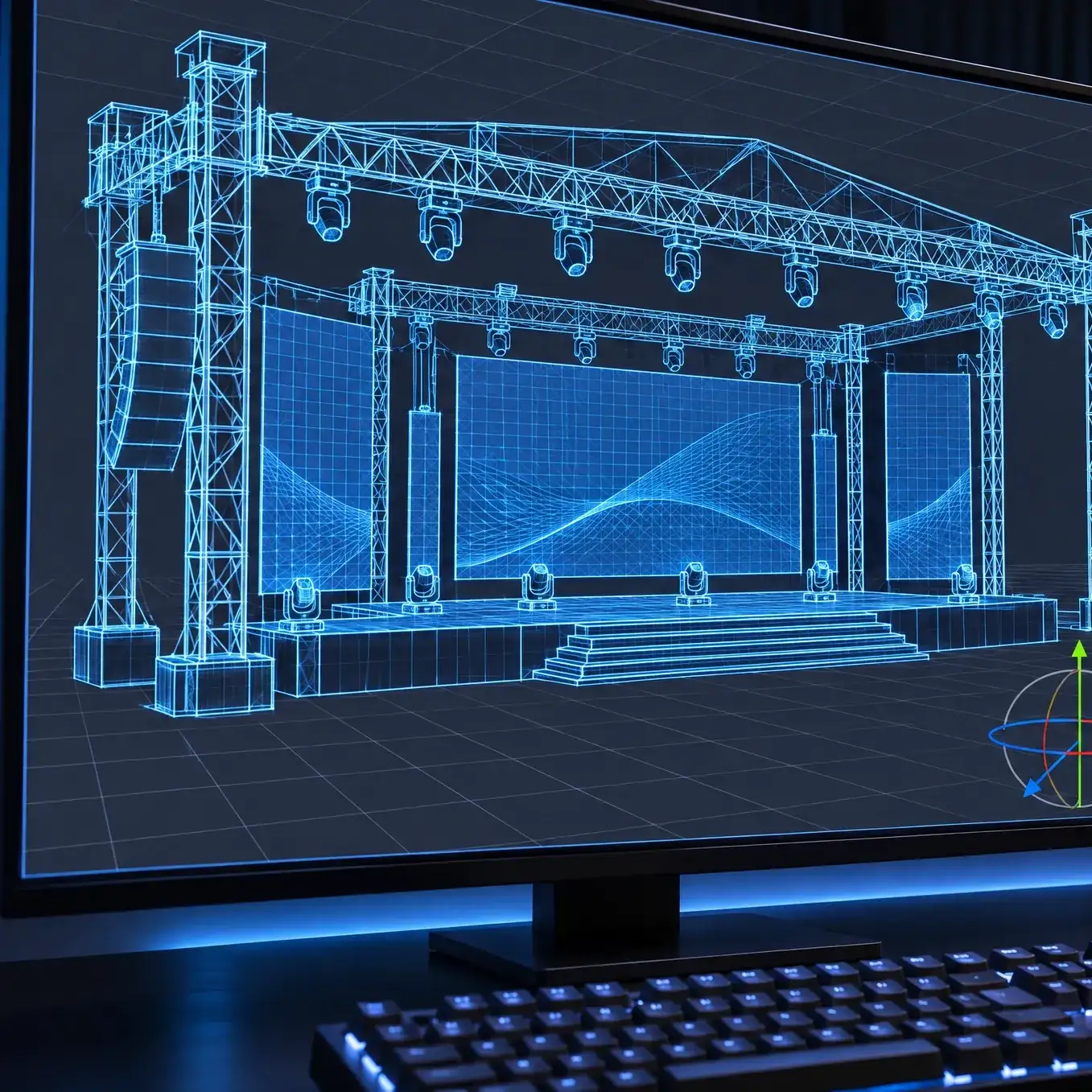
Rigging is the single biggest yes-or-no in a room. A venue that cannot take point loads changes your lighting, your screens, and sometimes your whole stage position, because everything has to stand on the floor instead.
Ask whether the venue holds a rigging plot with rated points, and who signs off. "We have hung things before" is not the same answer as a rated point on a drawing.
3. How does gear get from the truck to the room?
Ask about the dock, the door dimensions, the route, and the elevator. Specifically: can a road case get from the loading area to the room without going through a public space, and does anything on that route have a width or weight limit?
This is the question that turns a four-hour load-in into an eight-hour one. It is also the one most likely to be answered optimistically, so it is worth walking the route yourself if you can.
4. What is the ceiling height, and what is under it?
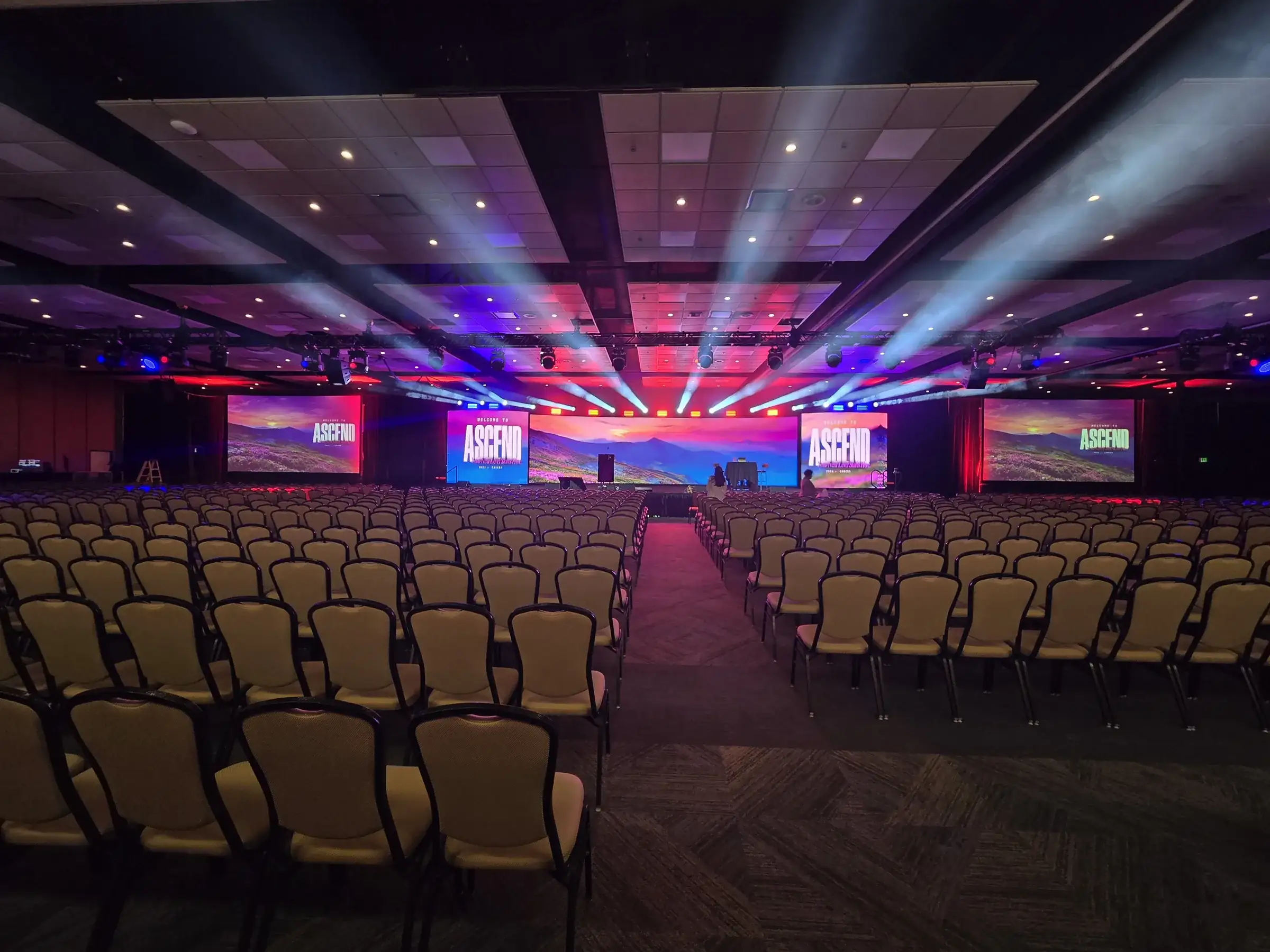
Ceiling height decides screen size and whether a screen can be seen from the back of the room. What is under it matters just as much: sprinklers, HVAC, ductwork, and lighting bars all take up the space you were going to hang in.
Ask for a section drawing if one exists. Most venues have one and few offer it.
5. When can we get in, and when must we be out?
The published load-in time is often the time the doors unlock, not the time your crew can start. Ask what else is in the room the day before and the day after.
Ask about the curfew separately. A hard out time drives crew size more than almost anything else, because a strike that has to happen in two hours needs the people to do it in two hours.
6. Is there anywhere to put things?
Cases, spares, empties, and the crew's own kit have to live somewhere for the duration. A room with no back of house means everything either stays in the truck or stands in the room looking untidy.
Ask whether the truck can stay on site. If it cannot, ask where it goes, because a trailer parked an hour away turns every forgotten item into a two-hour round trip.
7. What is the internet, and can we have our own?
Ask whether hard lines are available, what they cost to provision, and how long the venue needs to arrange them. Guest wi-fi is not a delivery mechanism for anything that matters, and it is shared with everyone in the building.
If anything is being streamed or fed to a broadcaster, this question stops being an IT detail and becomes a show-critical one.
8. What are you not allowed to do here?
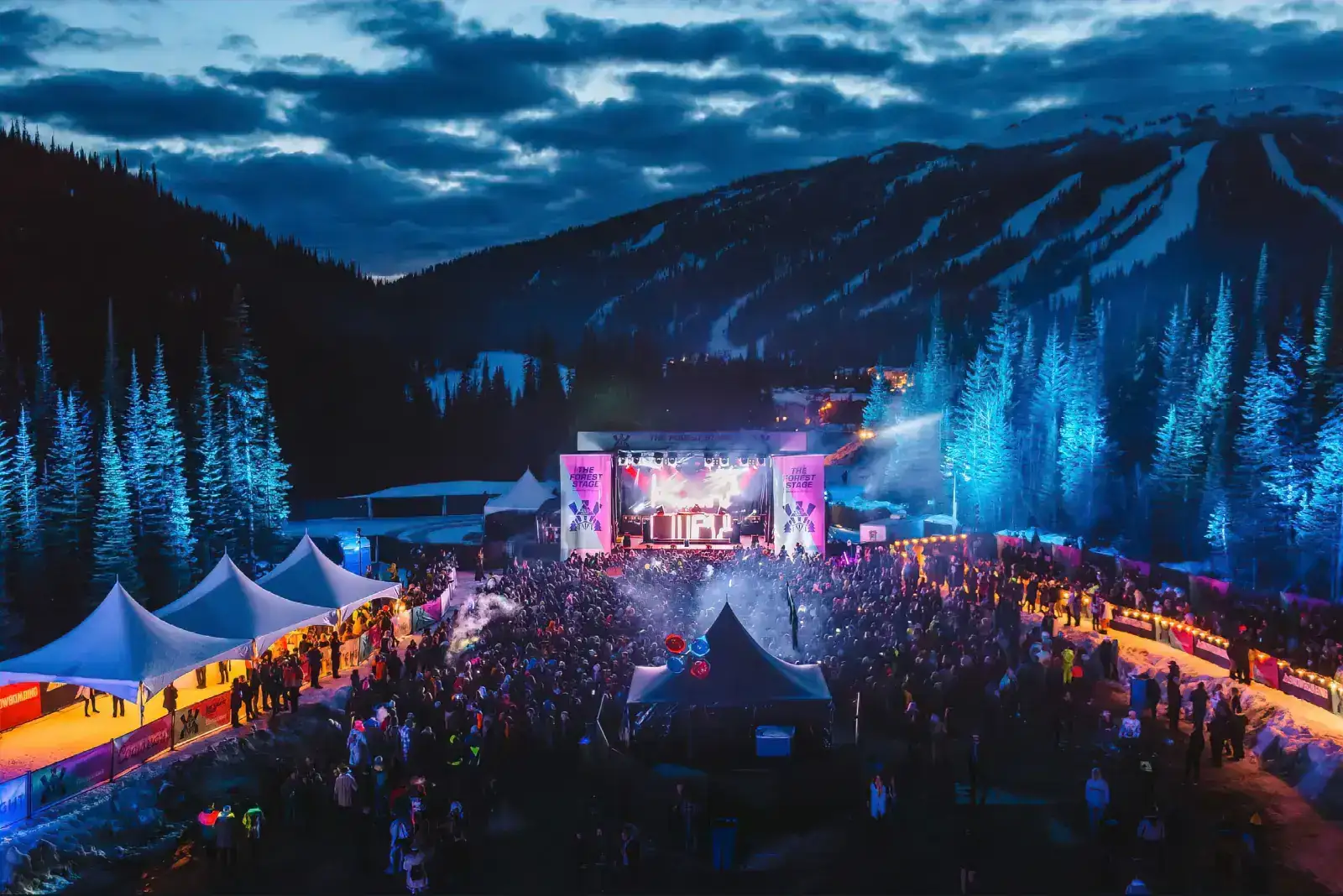
The catch-all, and often the most revealing. Noise limits, curfews, restrictions on what can touch the walls or floor, unions or in-house crew requirements, exclusive suppliers you must use, and fire regulations about drape and open flame.
Venues rarely volunteer this list. They will usually give it accurately when asked directly.
What to do with the answers
You do not need to interpret them. Send them to whoever is building the room and let them tell you what the constraints mean.
The value is in the timing. Every one of these answers is free before you sign and costly after, because before you sign you can still choose a different room. Afterwards you are buying your way around whatever you find.
The one that matters most
If you only ask one, ask about rigging. Power can usually be brought in, access can usually be worked around, and storage can usually be improvised.
A ceiling that will not take a point load cannot be argued with, and it changes the shape of everything underneath it.