



Direct answer
It is a risk decision, not a geography decision. For a straightforward meeting, a good local company is usually the right call. For anything high stakes, highly visible, or repeating year after year, there is real value in bringing the team that already knows your organization. And there is a third option most planners never hear about: your regular production company leads the planning and sends two or three key people, while the equipment and most of the crew come from a local supplier.
The option most people miss
Start here, because it is the one nobody offers you.
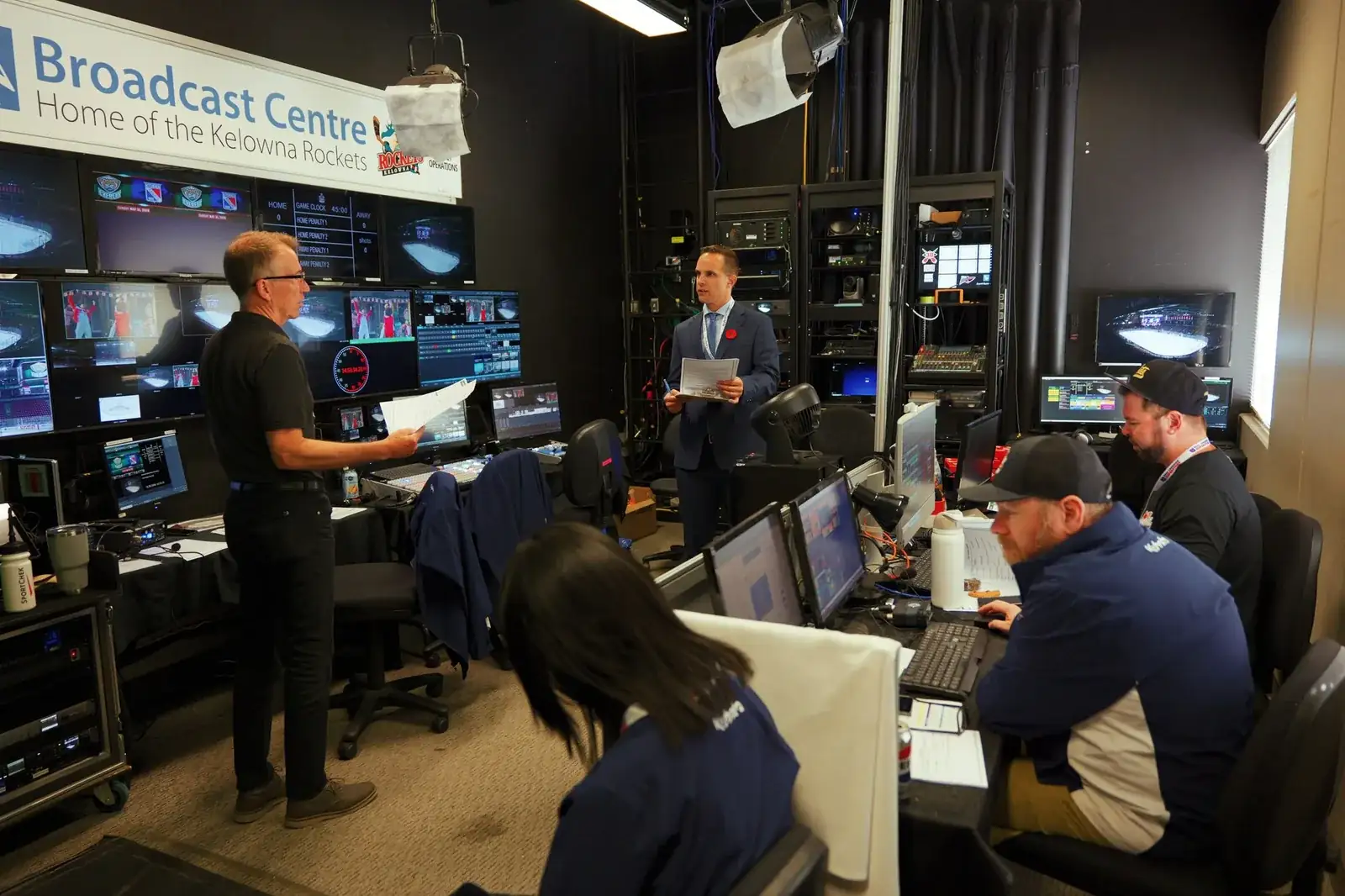
Rather than choosing between local and travelling, engage your regular production company to lead the planning, the design, and the delivery, and have them work alongside a qualified local company for equipment and part of the crew. Your production company stays accountable for the plan, the standards, and being your single point of contact. The local company supplies gear, labour, and logistics.
Usually only key personnel travel. A project manager, a production manager, a technical director, or a lead technician. Everything else is sourced where the event is.
What that buys you:
- Travel and accommodation drop sharply
- You use local inventory and local labour
- The people who know your event still run it
- It looks and feels like last year's event
- Somebody experienced is watching quality, and they work for you
For a large event out of town, this is often the strongest position available, and it is rarely on the table unless you ask for it.
Start with complexity, not distance
Five questions that decide it faster than a price comparison:
- How complex is the event, really?
- How many stakeholders have to be satisfied?
- How much does consistency with previous events matter?
- How much risk can the organization carry?
- Are there technical or creative requirements that are specific to you?
The more complex the event, the less the decision is about geography and the more it is about whether the team already understands what you expect.
What you are actually buying down
A local company may know the building better than anyone. What they may not know is you. If something moves during planning or on the day, the questions that matter are:
- Will they understand which things are negotiable and which are not?
- Will they know how this event ran last year?
- Will they respond the way your organization expects, in front of your leadership?
A team that has worked with you before answers all three without being told, and usually sees the problem coming.
Local is not automatically cheaper
This is the most common wrong assumption in the whole decision.
Pricing varies significantly between regions, venues, and markets, and travel is one line among many. An established company working with a long-standing client will often find room: consolidating transport across several events, using regional inventory and people where they have them, scheduling to cut travel days, or offering better terms because the relationship matters more than one job.
The only way to find out is to put the whole picture side by side rather than comparing the travel line.
When consistency is worth it
If you run several events a year, a travelling team already knows your brand standards, your leadership, your presenters, the room layouts you prefer, and what you consider finished. That knowledge cuts planning time and removes a category of mistake that is otherwise repeated annually.
Our take
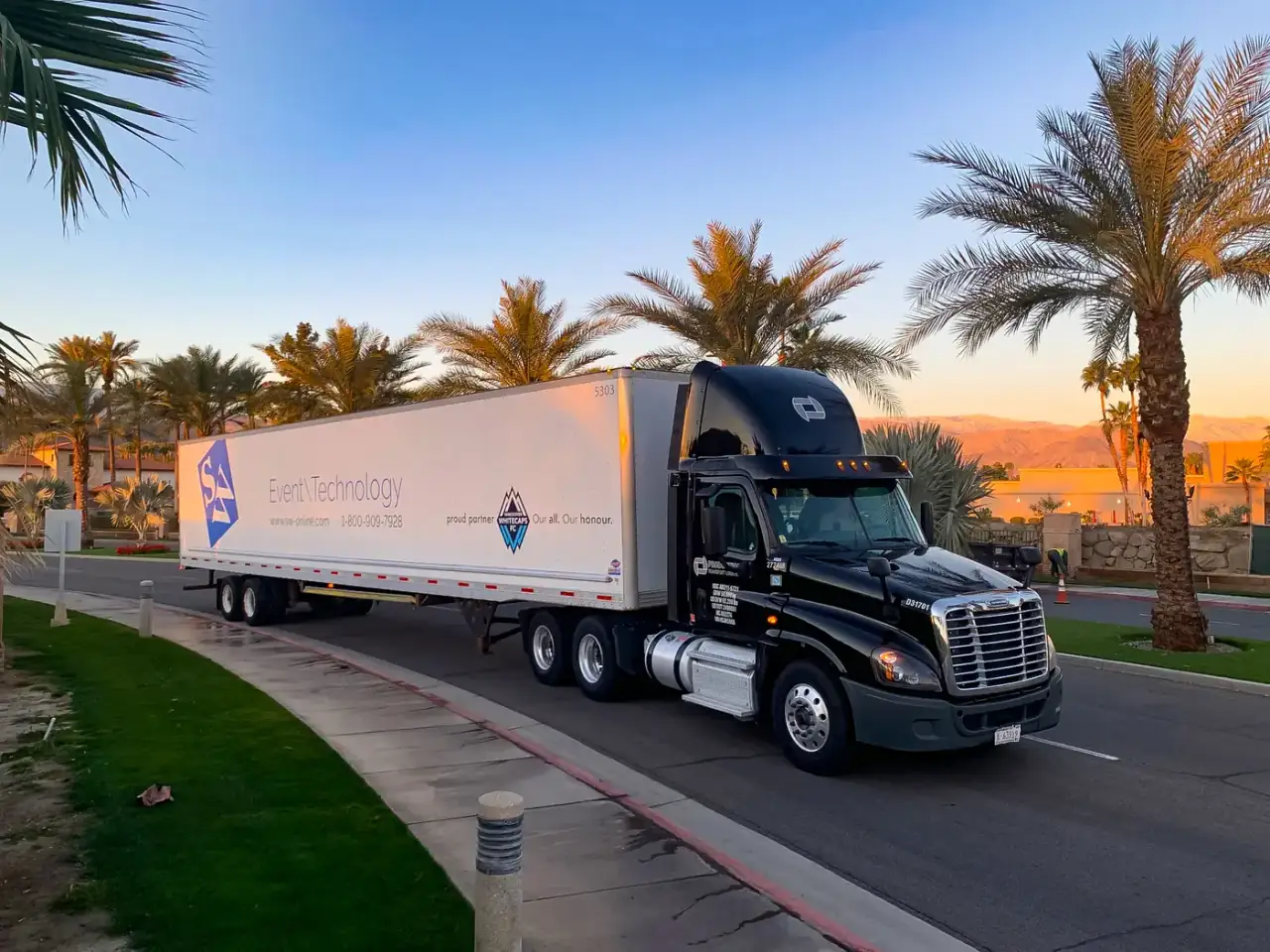
SW travels anywhere in North America and beyond, and this works well all three ways. Local, travelling, and hybrid.
Settle trust and capability first, then look at cost. If the event is simple, a strong local company is the practical answer. If it is mission critical, highly visible, or held to a standard somebody has already established with you, there is real value in bringing that team.
What most clients do not realize is that it is not either or. Some of the best events run on the hybrid model, with a production company leading the strategy and execution and a local company supplying the room. It takes a lot of cost out and keeps the confidence in.
Clients who pick local to save money sometimes lose the saving again in extra planning time, longer email chains, and a result that did not match last year. Production companies also work hard to make travel affordable, because a long relationship is worth more than one event.
The question to ask is not what travel costs. It is what confidence and consistency are worth to you on this particular event.
The bottom line
This is risk management, not procurement.
For a simple event, hire local. For a complex one where the stakes are high, bring the team that knows you. For everything in between, ask about the hybrid model, because it usually gets you both and almost nobody volunteers it.