

Direct answer
Call the references they give you, then keep going. The two sources that tell you the most are the venue and other planners, because neither was chosen by the company. Ask all of them the same question: what happened when something went wrong. Then visit the warehouse. Half an hour there tells you more than any proposal.
Their references are the starting line, not the finish
A company that will not give you references, case studies, and examples of comparable work has answered your question already. But remember that every company puts forward the clients most likely to say something kind. That does not make the conversation useless. It makes it incomplete.
Five questions worth asking:
- Did they deliver what they said they would?
- What happened when something did not go to plan?
- Did it come in on budget?
- How was communication, before and during?
- Would you hire them again?
Question two is the one that matters. Anyone can describe an event that went perfectly. How a company behaved on the day something broke is the part that predicts your event.
Call the venue
This is the best source available and almost nobody uses it.
Venue managers, convention centres, and hotels watch AV companies work over and over, across many different clients. They have no stake in protecting anyone, and they see the parts of a company's behaviour that a client never does. What load-in looked like. Whether the crew followed the building's rules. What the room looked like at 2 a.m.
Ask them:
- Have you worked with this company before, and how often?
- Do they know your procedures and your restrictions?
- How would you describe their professionalism and their technical competence?
- Would you recommend them for an event like mine?
Ask people who were in the room
Colleagues and industry peers who have attended events this company produced will tell you what an audience actually experienced. Did it feel professional? Were there noticeable technical problems? Did it run on time?
That perspective is different from the client's and it is worth having.
Go and look at the warehouse
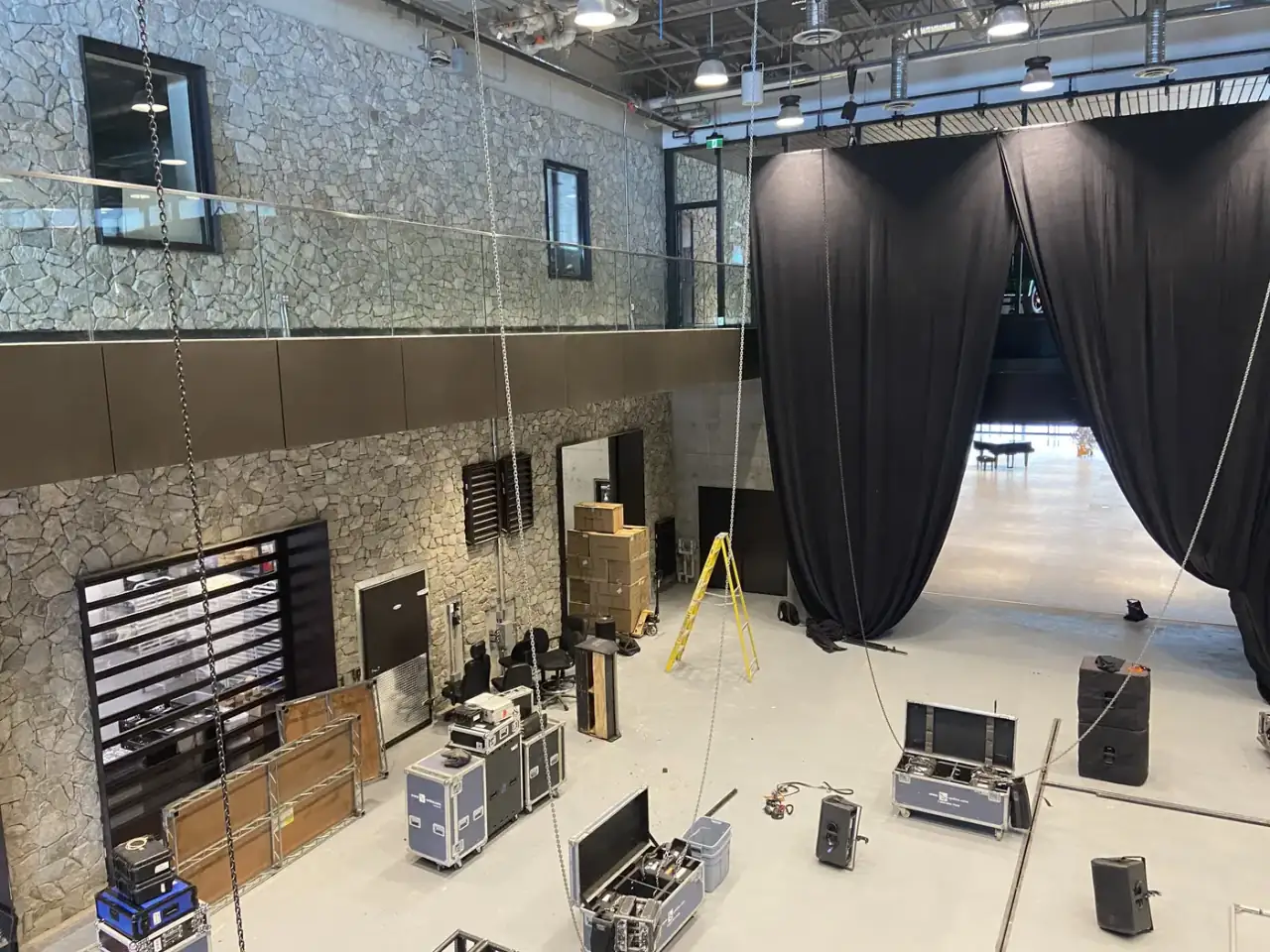
The best companies are glad to show you. Ask to see recent photos and video, examples of comparable events, an upcoming setup you could drop in on, and the facility itself.
A visit tells you about:
- The condition and maintenance of the equipment
- How inventory and logistics are organized
- The culture of the team
- The real scale of the operation
- Whether they have invested in infrastructure or are booking it in
A big warehouse does not automatically mean a good company. But how a company maintains its gear and organizes its inventory is a reliable signal of how it runs an event.
What you are listening for
The strongest evidence is agreement between sources who have never spoken to each other. When a venue manager, a former client, and a planner you know independently describe the same company the same way, that is a real reputation, not a reference list.
Our take
References matter most when they come from more than one direction.
Ask for client references, of course. That is the first step, not the last one. Some of the most useful things anyone learns about a company come from venue managers, from other planners, and from people who simply sat in the audience.
Visit the facility if you can. A warehouse tour tells you an enormous amount in a short time. You see the equipment, the people, the systems, and how seriously they take the details when no client is watching.
And trust what you hear repeatedly. Companies that have delivered good work for years are known. They have a reputation you can find, not just a list they can send you. The ones who have earned trust over decades do not have to tell you they are reliable. Other people tell you first.
The bottom line
Checking references is not collecting compliments. It is verifying experience, capability, and whether the company behaves well under pressure.
Start with their list, then go past it, to the venue, to other planners, and to the warehouse floor. The more independent sources you hear from, the clearer the picture gets, and the less likely you are to be surprised on the day.