


It depends on what we are building and how much time you give us to build it.
That sounds like a dodge. It isn't. Two events can look exactly the same when the doors open and need completely different crews to get them there. Access, setup time, venue restrictions, and the order things have to go together are what decide the number, not the size of the guest list.
Here is what the range actually looks like.
Crew sizes, roughly
- Small corporate setup: normally 3 to 5 crew.
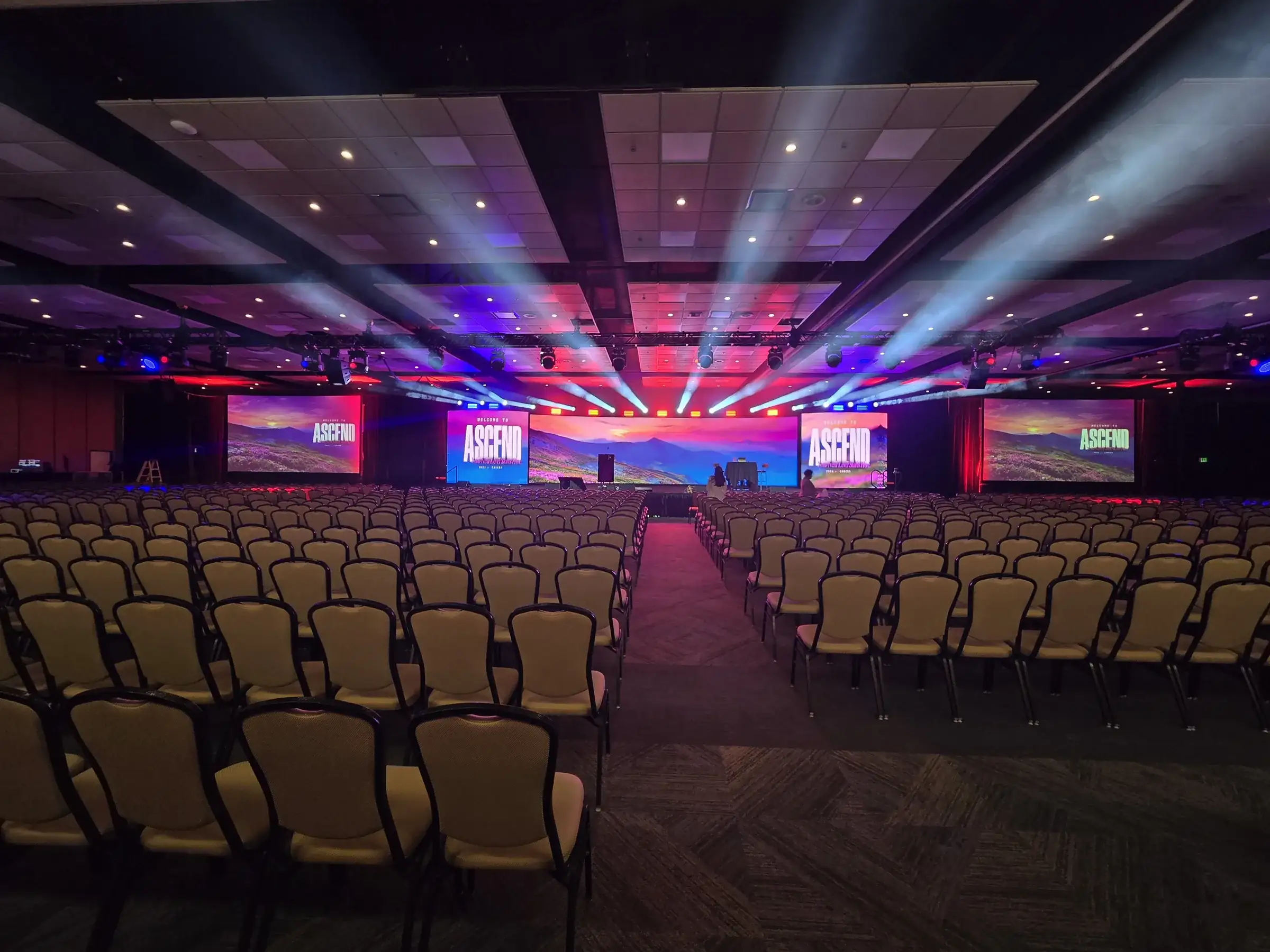
- Medium ballroom show: around 6 to 10.
- Large conference, lots of LED or staging: 10 to 20 or more.
Two things move those numbers more than anything else.
Less time means more people. There isn't really a way around that. If the room opens late and rehearsal is fixed, the only variable left is how many hands are on it.
Access can eat hours. A bad loading dock, one freight elevator, or a long push from the truck will change the plan more than the equipment list will. A ten-minute push doesn't sound like much until you are doing it with an entire show's worth of gear.
And you don't just need bodies. You need the right people. Everything still has to be powered up, programmed, and tested once it is built, and that is not work you can solve by adding another pair of hands at the end.
Load-in and load-out, realistically
- Simple meeting: 3 to 4 hours.
- Normal corporate ballroom: 6 to 8 hours.
- Bigger LED, lighting, and staging show: 8 to 12 or more.
- Really big shows may need a pre-rig or a second setup day.
For a typical corporate ballroom, 6 to 8 hours is a good window. It gets everything in, built properly, tested, with room for the surprises, and the room finished before you walk in for rehearsal. Not everyone sprinting at the last minute.
Rigging, staging, LED, audio, and lighting have an order. We can't build all of it at once, which is why a compressed schedule costs more people rather than the same people working faster.
Rehearsal is not setup time. If you want to rehearse at three, we need to be finished before three, not plugging in the last cable while you walk through the door.
Load-out is usually quicker, because nothing is being tested or programmed. But if the venue says everything is gone by midnight, that may mean more people on the strike, not fewer.
What actually causes surprise labour charges
When SW builds your crew schedule, we look at the whole day. Setup, rehearsals, show, and strike, not just the hours your guests are in the room.
Overtime almost never comes from the show being complicated. It comes from the schedule moving: late access, a rehearsal running long, the show going over, or a strike that can't start when it was supposed to.
In British Columbia, the floor is set by provincial employment standards. Section 40 of the Employment Standards Act requires time-and-a-half over 8 hours in a day, double time over 12 hours in a day, and time-and-a-half over 40 hours in a week. A 30-minute meal break is required after no more than five consecutive hours, and if the crew has to keep working or stay available through that break, it counts as time worked.
That is the legal minimum, and live events work to a tighter standard than it. Much of this industry is paid on a day rate, a day rate usually covers 10 hours, and hours past 10 are typically billed at double time rather than at the 12 the statute allows. So the number that shows up on your quote is 10, not 12. Crew agreements and union venues stack their own triggers on top of both.
Outside BC it varies. Every province sets its own employment standards, every state has its own rules, and a union venue can have a collective agreement that overrides both. Rather than run a different standard in every market, we work to the same one wherever we go, and where the local rules are stricter, the local rules win.
It's really about keeping the crew sharp. After a fourteen-hour day, people are tired and that's when mistakes can happen, especially during strike. Keeping to a reasonable working standard helps the crew stay focused, keeps the show running smoothly, and makes your labour costs a lot more predictable.
The one thing that saves clients the most money
Tell us early.
Late information, not complexity, is what costs money. If we know from the beginning that you're going late, or that access is tight, or that the rehearsal has moved, we can schedule the right crew and build it into the plan instead of it arriving as a surprise on the invoice.
Sometimes adding two or three people at the start saves you having the whole crew there for extra hours at the end.
And if something changes on site and we can see we're heading into additional labour, you will hear about it before we get there, wherever that is possible.
Tell us your access times early. If the timeline doesn't work, we would much rather tell you three months out than three hours out.