


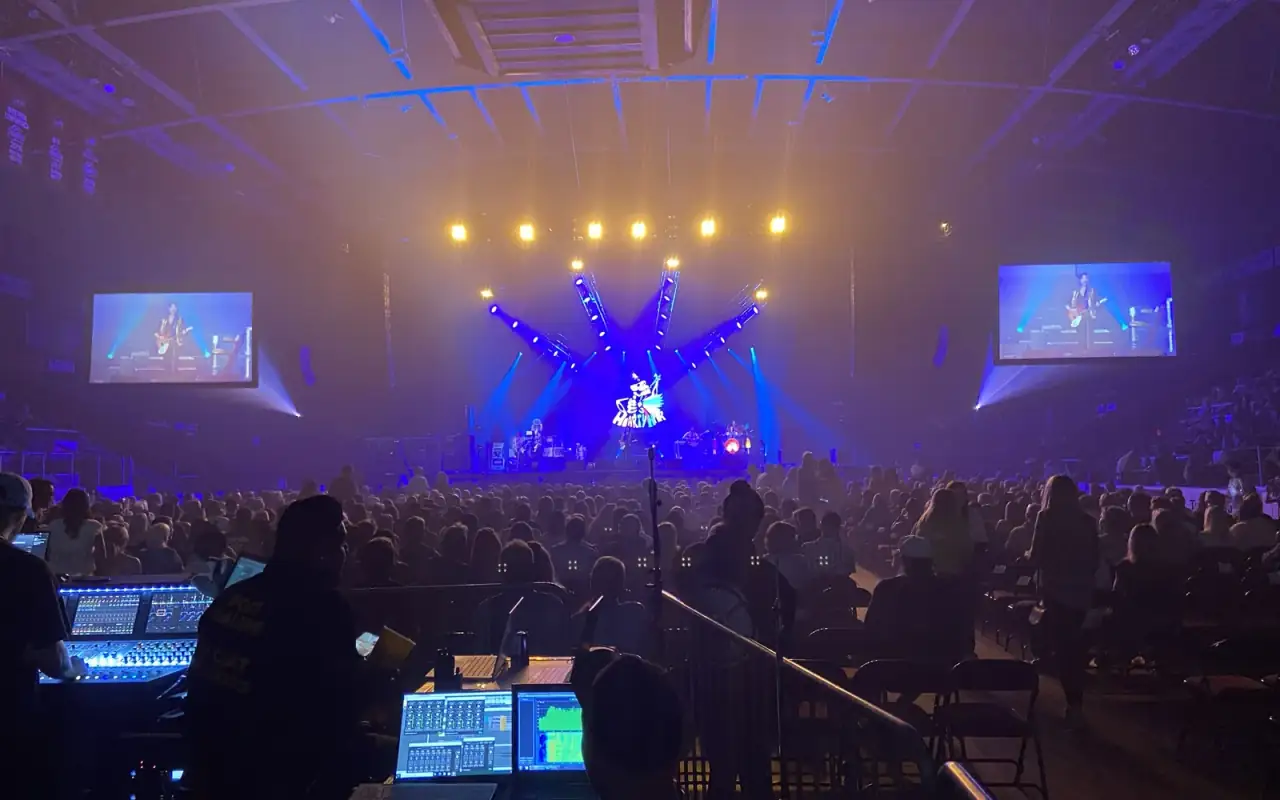
The mix position is only part of an audio plan. The stage patch, rack, and connection between them need to be agreed with the engineer before the equipment goes to site.
SW’s DiGiCo inventory includes the SD10 digital console, an SD-Rack, and HMA optical cabling. That puts the desk and its stage connection in the same conversation.
Specify the patch as well as the desk.
The SD10 provides digital mixing, routing, and onboard processing. The SD-Rack connects the stage inputs and outputs to that system. The installed rack configuration and the show requirements determine the patch, rather than a headline maximum in a product brochure.
For an incoming engineer, that means the preparation starts with the rider, input and output requirements, show-file information, and the planned front-of-house position. Optical routing and cable access belong in the site plan alongside the console position.
Plan the control around the show.
A conference, concert, or broadcast each brings its own sources, outputs, and operating needs. Agree those requirements with SW so the console, rack, cabling, and crew scope fit the production.
Bring the people who will mix the show into that discussion. The equipment plan should reflect what they need to run.