A stage can look right from the front row and fail the back one.
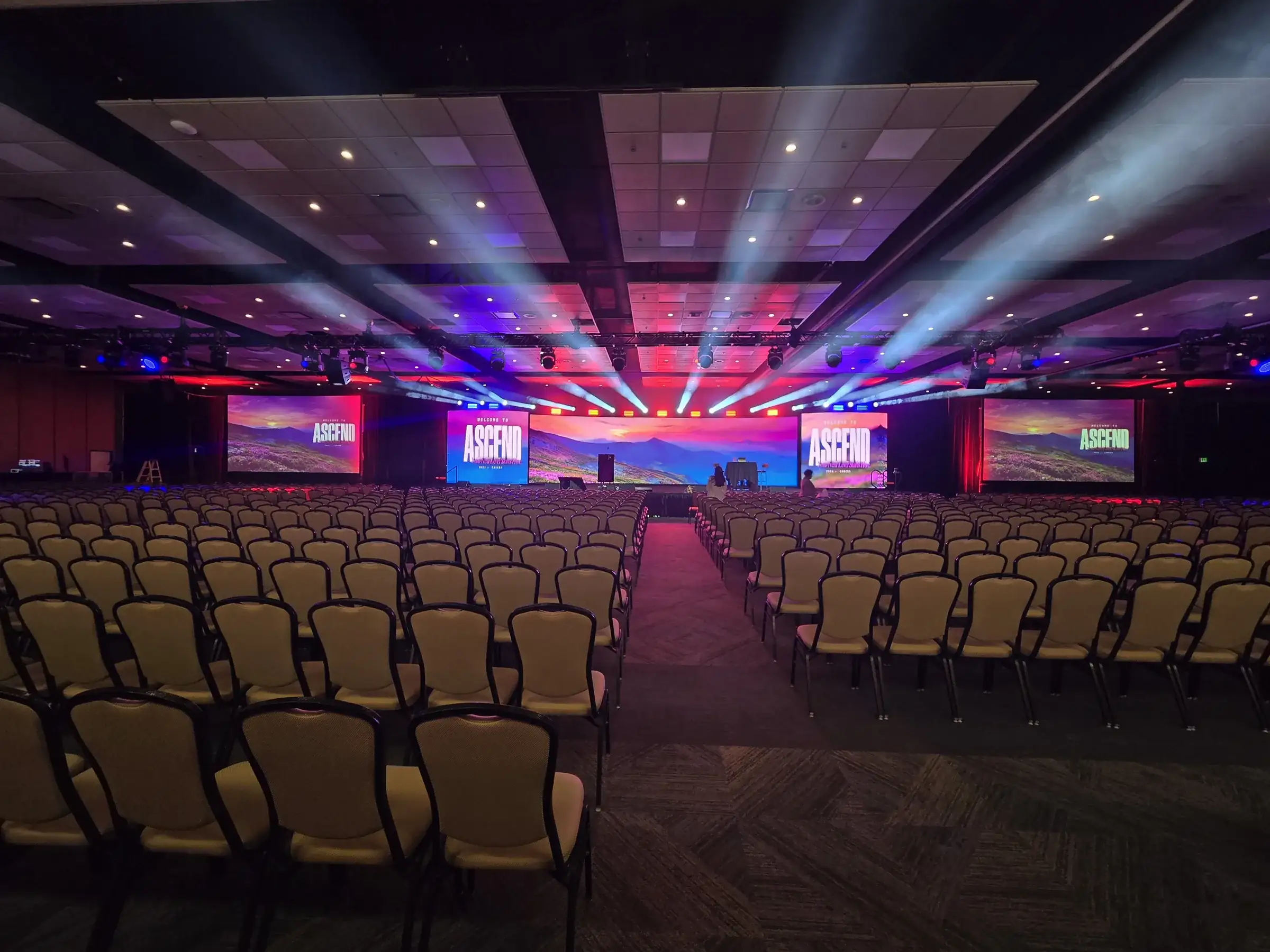
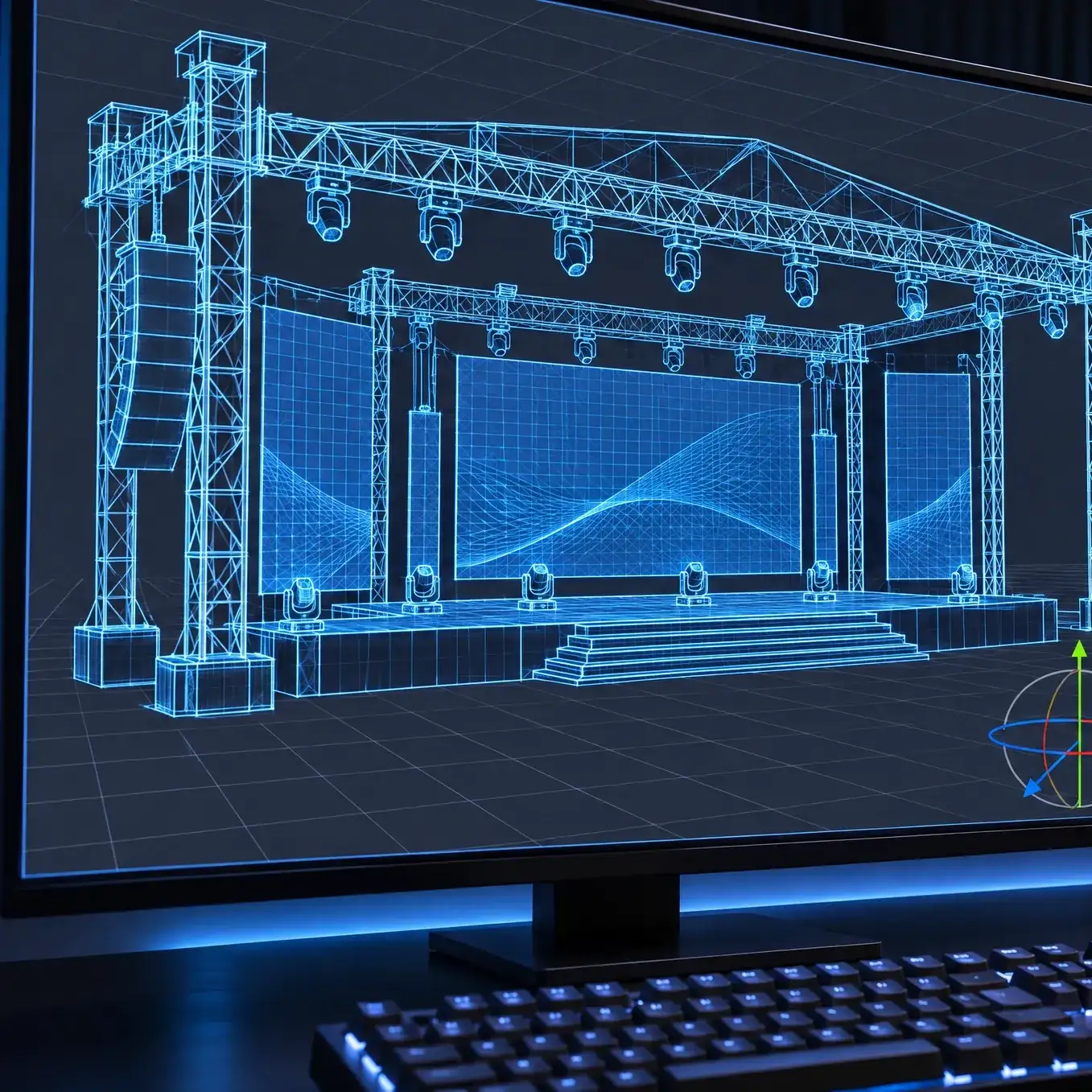
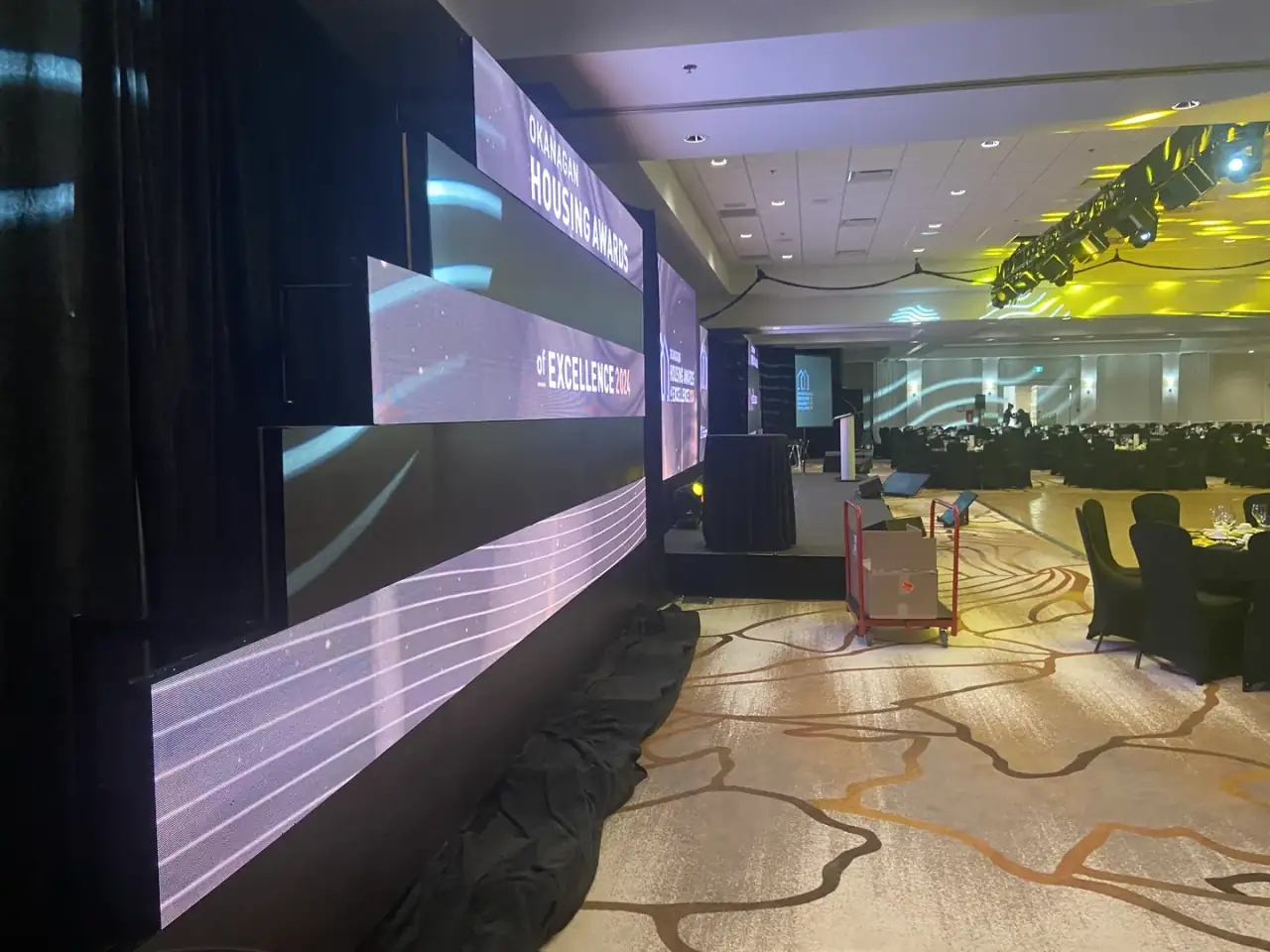
With a 1,000-person conference, SW starts with the floorplan and what the person sitting in the very back needs to see and hear. Screen size, stage dimensions, sightlines, and lighting all have to work together, and the technical design is built around that. The stage can look great from the front; however it is just as important for the audience at the back to clearly see the presenter and content.
What the design has to settle
- Room dimensions and ceiling height
- Stage size and height
- Screen size based on the distance to the back row
- How many screens
- Confidence monitors
- Wireless microphone quantities depending on the program
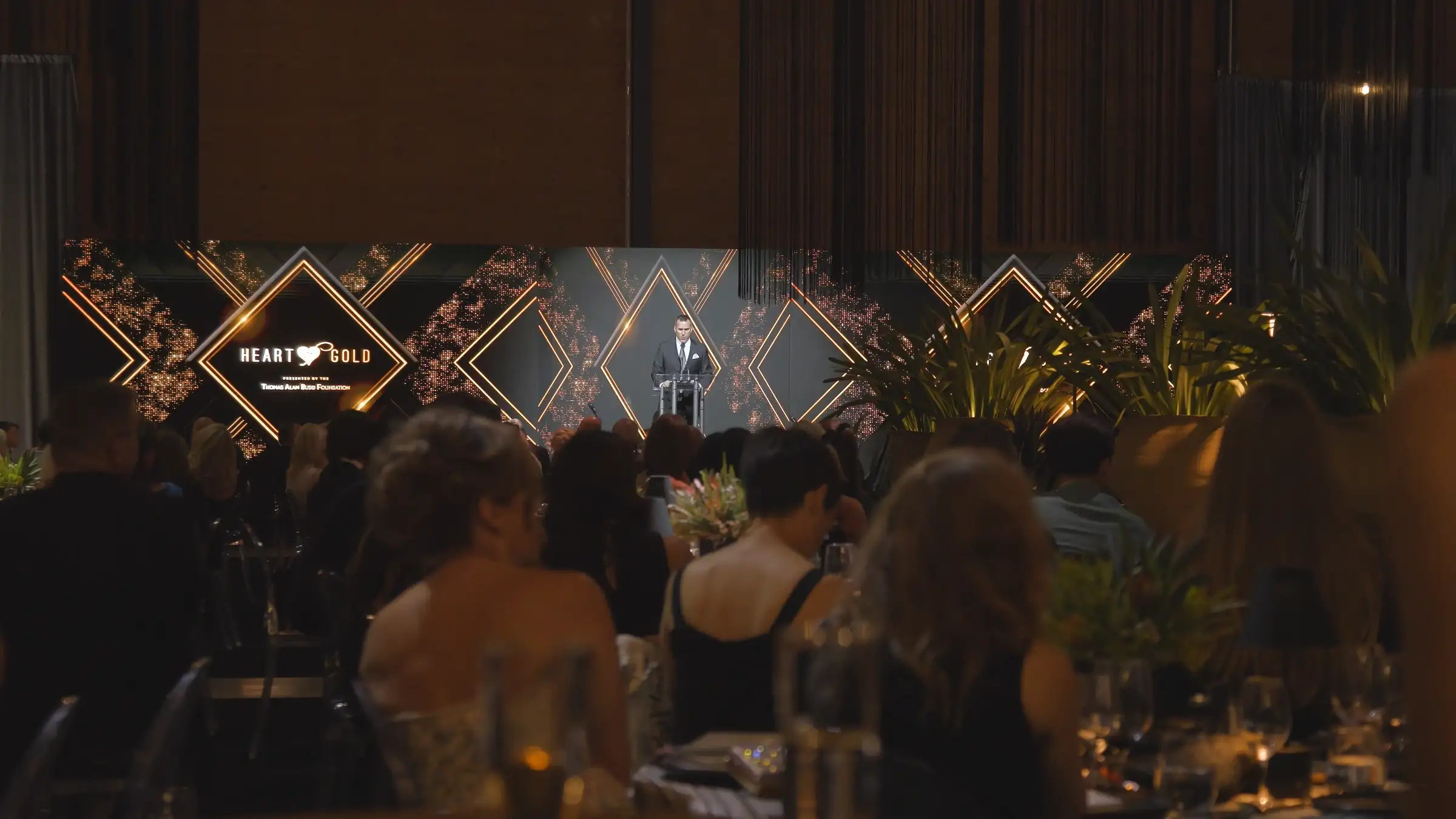
- Stage lighting for presenters and for cameras if there is a Livestream and/or recording component.
- Scenic elements and branding (podium?)
- Camera positions that don't interfere with audience sightlines
- Playback and presentation computers
- Backup presentation system
- Dedicated audio engineer
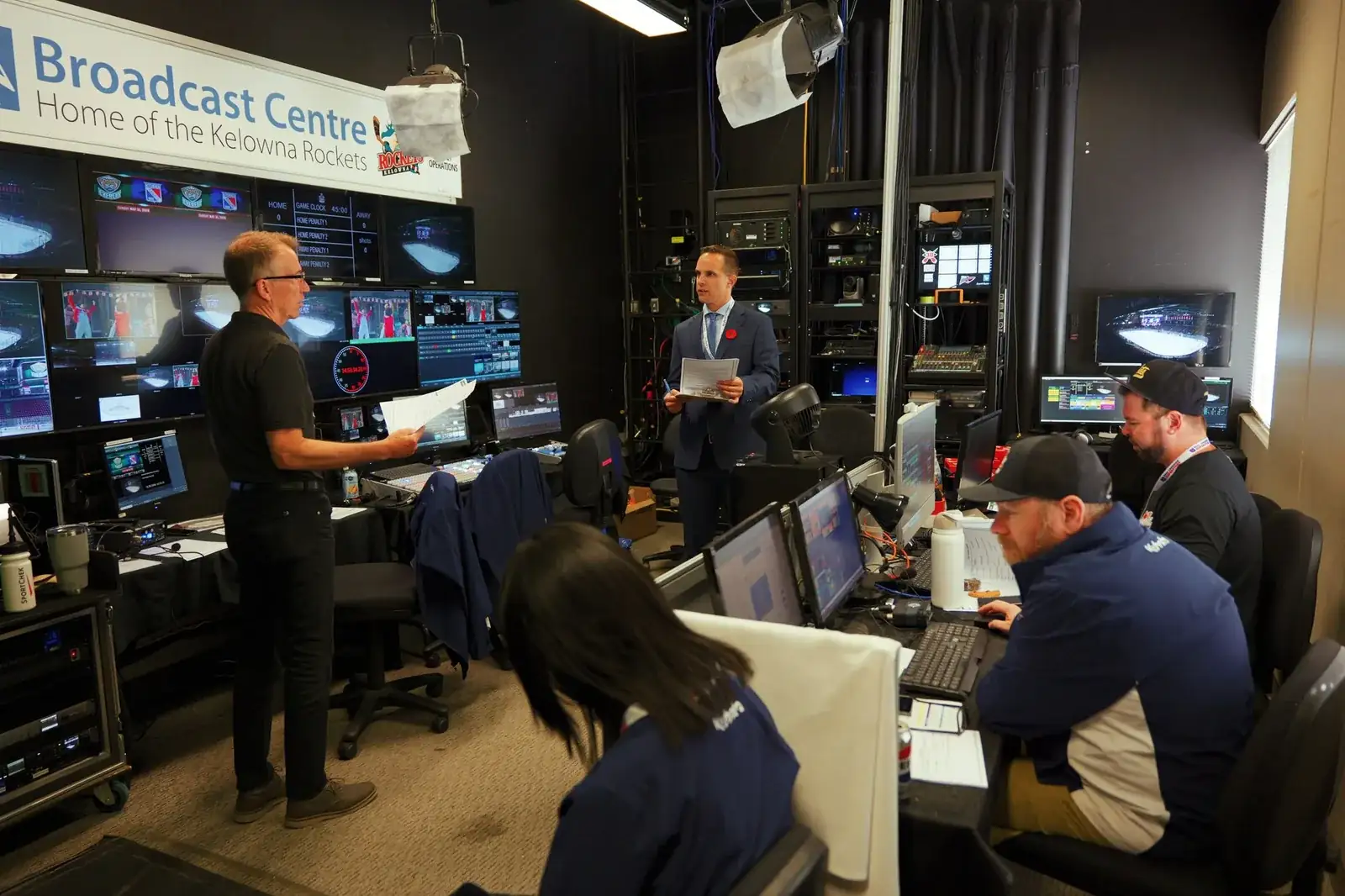
- Dedicated video technician
- Lighting technician when the design requires it
- Full stage rehearsal before the first session
- Content locked and tested before the event
There is a published standard for screen size
"Big enough to see from the back" is not a measurement, and it does not have to be a guess. Screen sizing has an engineering standard behind it: ANSI/AVIXA V202.01:2016, Display Image Size for 2D Content in Audiovisual Systems, usually shortened to DISCAS (ANSI webstore listing). The full standard is paywalled and a revision has appeared, so read anything quoted from it as the 2016 edition. AVIXA publishes the working parts and calculators openly (AVIXA, display image size calculators).
The idea it works from is more useful to a planner than the arithmetic. Rather than sizing a screen against the room, DISCAS sizes it against the smallest thing on the slide that somebody has to read. AVIXA defines its %Element Height as "the height of an element in relation to the overall Image Height," and separates two viewing cases with different acuity factors: 200 for basic decision making, and 3438 for analytical decision making (AVIXA, "Learn More About Display Size"). In plain terms, a room where people are reading headlines and watching a speaker is a different calculation from a room where somebody has to read a figure off a spreadsheet. If your keynote has a financial slide in it, that slide, and not the title card, sets the screen size.
The rule of thumb it replaced
Before DISCAS, the habit was the 4/6/8 rule: the farthest viewer sits no more than four times the image height away for analytical viewing, six times for basic presentation viewing, and eight times for passive viewing (explainer, SlashGear). It is still a fast sanity check when someone gives you a room depth over the phone. It is also more forgiving than the standard. The integrator Level 3 Audiovisual notes that DISCAS "recommends some uncomfortably large displays" compared with 4/6/8 habits (Level 3 Audiovisual, "The Qualiverse: Determining Display Size," April 20, 2022). Both are true at once, which is the practical part of the job: run the calculation, then negotiate it against ceiling height, sightlines, budget, and what the content actually contains.
Lighting is the cheapest thing that changes the room
Of everything on the design list, lighting returns the most for what it costs. Mason Freitas, a production specialist at AVL Solutions, told Meetings Today: "The biggest thing for making an impact at favorable cost is lighting. If you want people to be wowed the moment they walk into the room, it's usually lighting that will do it... Without different lighting, even LED walls can lose their impact" (Rob Carey, "Setting the Stage: Expert Advice for Affordable, Effective AV and Production," Meetings Today, May 15, 2026). A large screen in a flatly lit ballroom reads as a large television. The same screen in a room where the walls, the set, and the presenter are lit deliberately reads as a stage.
If the keynote is being recorded or streamed, presenter lighting stops being a look and becomes a requirement. A camera needs more light on a face, and more even light, than an audience does.
Sets that answered the back row differently
PCMA documented several general session sets built at this scale: Freeman designed a stage with no back of house for Convening Leaders 2014, with presenters arriving from the main floor of the audience, which "instilled a tighter sense of community among the 4,000+ attendees"; GES built tiered 360 degree arena seating for 1,000 people at Bett 2013; and PSAV ran a curved projection screen 22 feet by 150 feet at TCT 2013 (PCMA, "4 General Session Sets That Will Get Everyone Talking," April 7, 2014). That article is from 2014 and its examples are projection heavy, which dates them, so read them as precedent rather than as current fashion. The thinking still travels. Every one of those rooms was solved by changing the geometry between the audience and the stage, not by adding equipment to a bad floorplan.