Six Cities. Fifteen Weeks.Every City a Release.
- 6Cities in fifteen weeks
- 389Sign-ups across seven match days
- 357Scored cheers
- 74Versioned builds shipped
01 / The Brief
A Crowd-Powered Stadium Game.
Toyota wanted a fan activity at Northern Super League (NSL) home matches that put its vehicle at the centre of the concourse. Fans sign up as a group, climb into a Toyota RAV4, and cheer as loud as they can for a fixed window.
Microphones in the cabin measure the noise. The screens turn it into a live meter, a score reveal, and a place on the day's leaderboard.
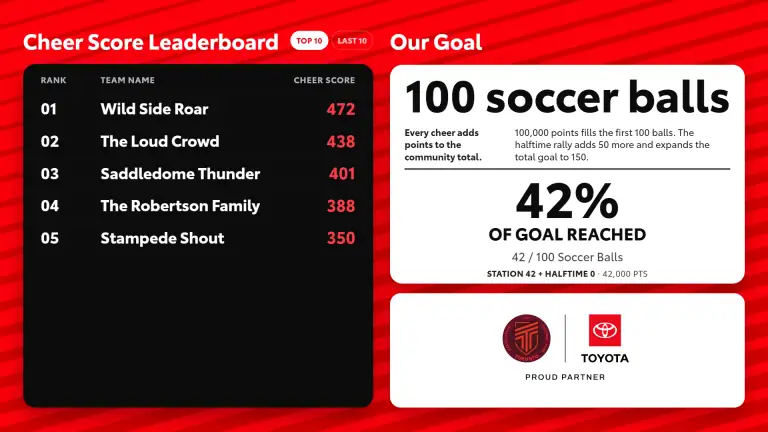
The day's leaderboard beside the community goal: 42 of 100 soccer balls. Names and scores in these pictures are test data.
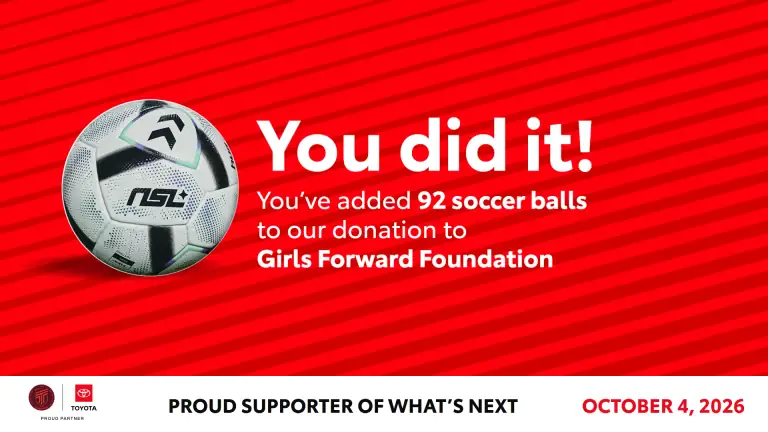
Donation reveal: "You did it!" with the soccer balls added to the donation.
In the summer season every cheer also added soccer balls to a Toyota donation for a local youth beneficiary.
The constraints shaped every decision. A different home club, city, language mix, and screen at each stop, often with two to four weeks between matches. Screens had to match the client's approved artwork exactly, as live animated layers rather than static slides.
Concourse crews, not developers, run the booth on match day. Stadium Wi-Fi is unreliable, microphones get unplugged, and the line of fans does not stop for either. Every sign-up is a consented marketing lead that has to reach the client cleanly after the match.
02 / The Work
Built to Keep Running.
Fan sign-up and live queue
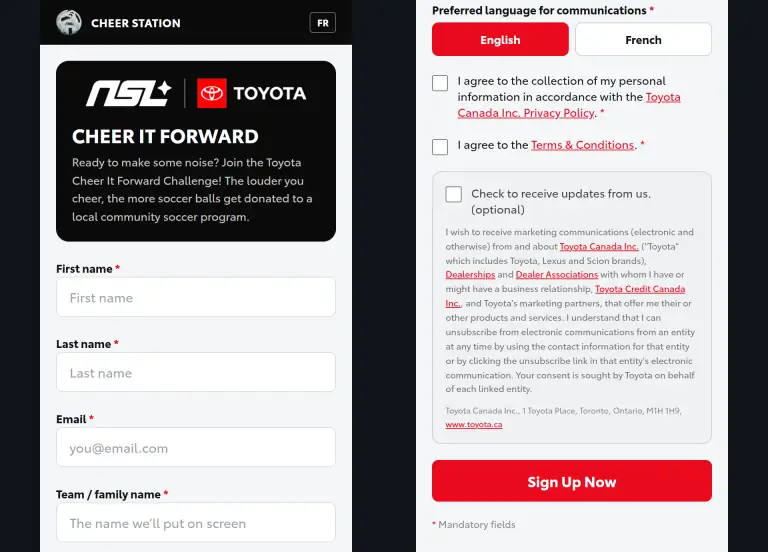
A QR code on booth signage opens a mobile sign-up page in English or French. Fans enter a team name and contact details, accept privacy and terms separately, and choose whether to hear from Toyota. Each sign-up joins a live queue in the cloud, so fans can check their place in line from their phone and come back when they are called. Two staff devices can never call the same team.
Staff tablet console
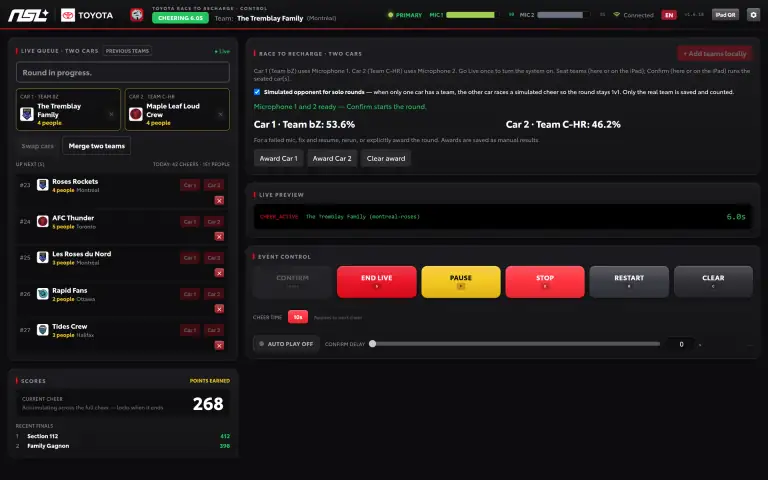
Brand ambassadors run the line from an iPad. They add walk-up teams, find returning participants, reorder or remove entries, and post a service notice to the sign-up page if the booth has to pause.
Control PC application
A Windows desktop application is the brain of the booth. It runs the countdown and cheer sequence, scores the audio, keeps the local leaderboard, plays the game sound, and drives two or three audience outputs. One technician runs a match day from one screen, with a keyboard shortcut for every step and live meters for both microphones.
Audience screens
Every screen is drawn live from layered brand art: the team-on-deck card, countdown, a cheer meter that reacts to the crowd, the score reveal with a soccer-ball drop, the leaderboard with a community goal, a Proud Partner card for the home club, matchup cards, and the halftime Cheer Rally.
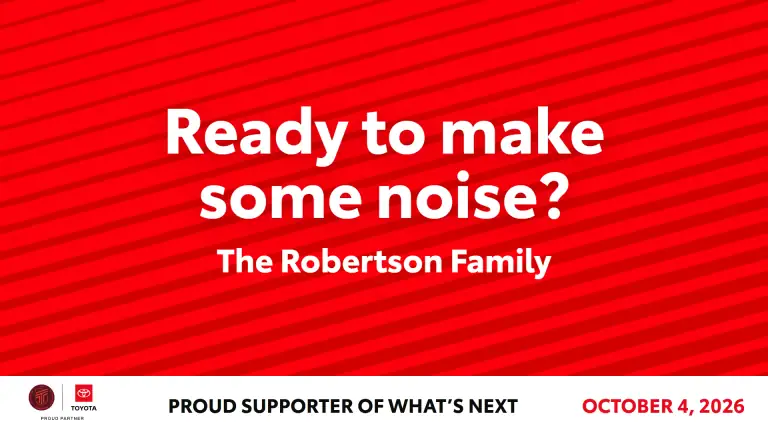
Team on deck: "Ready to make some noise?" with the team's name beneath.
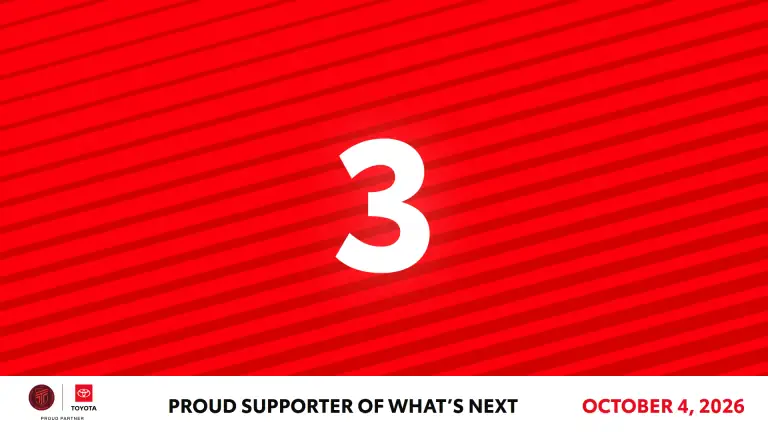
The countdown, at 3.
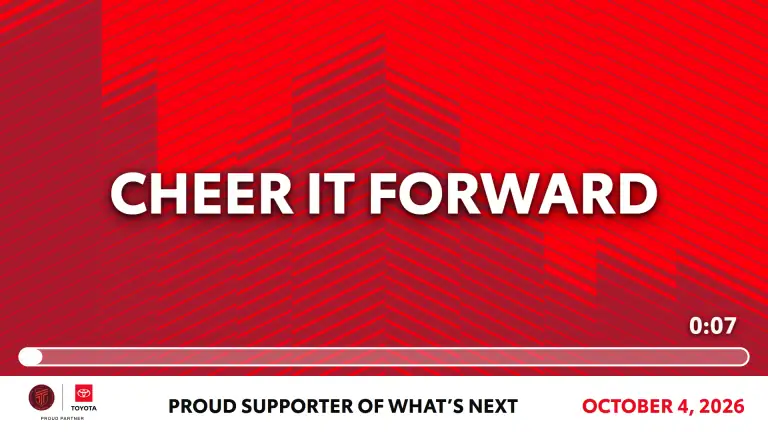
The live cheer meter. The artwork is the client's; SW built the software that draws it live.
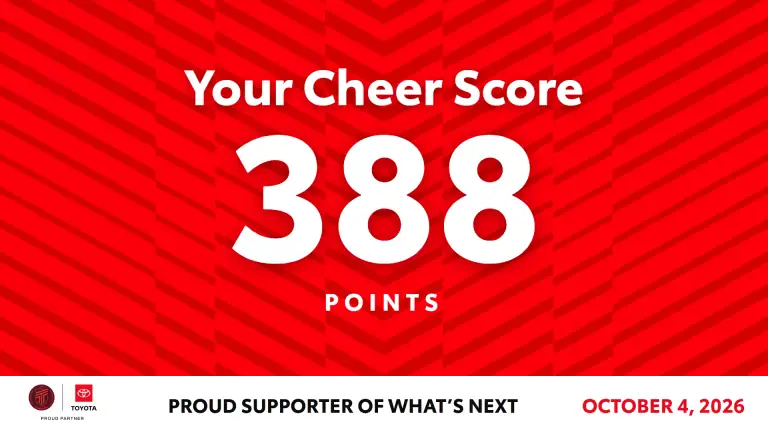
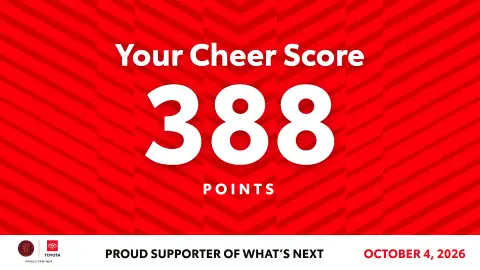
Score reveal: "Your Cheer Score", 388 points.
Colours were sampled directly from the client's artwork files. The chevron angles never move; only stripe thickness responds to sound, as the brand guidelines required.
Audio
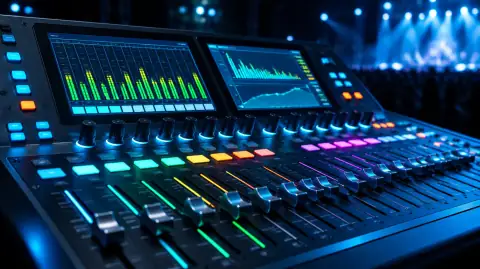
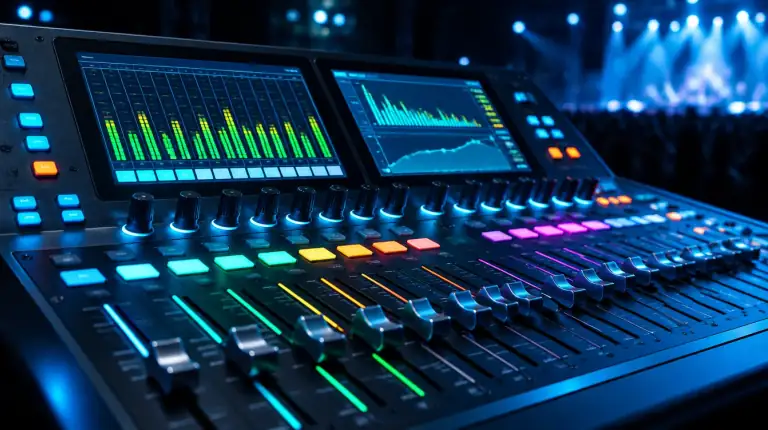
A lavalier microphone in the cabin feeds a wireless receiver and a USB audio interface. A wired backup microphone feeds a second interface.
Scoring
The score adds up crowd energy every 100 milliseconds across a 10, 15, or 20 second window and maps it to 0 to 500 points.
Countdown beeps, start and end horns, music beds, and the reveal sting all come from the same PC.
Halftime videos
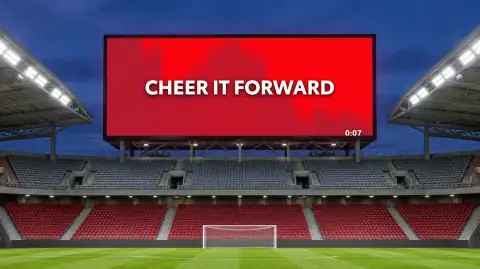
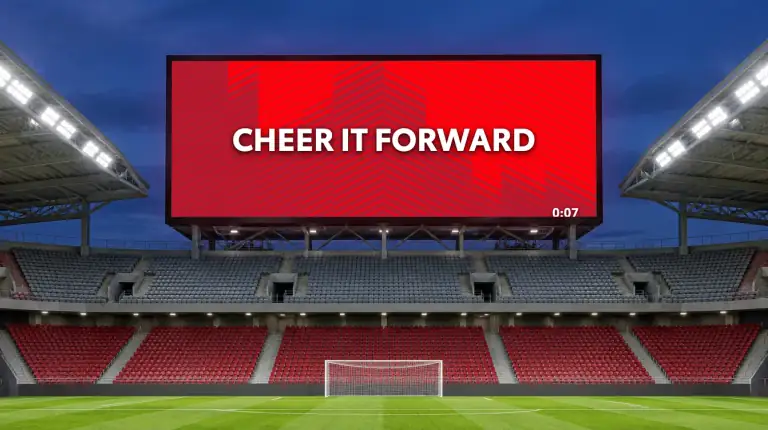
For stadium videoboards, halftime videos were rendered frame by frame from the same screen engine the booth runs, so the board matched the booth exactly.
Data reports
After each match the client received a branded data workbook covering every participant, marketing opt-ins, postal-code reach, and a summary.
Built to keep running
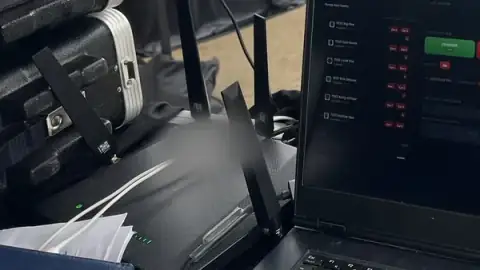
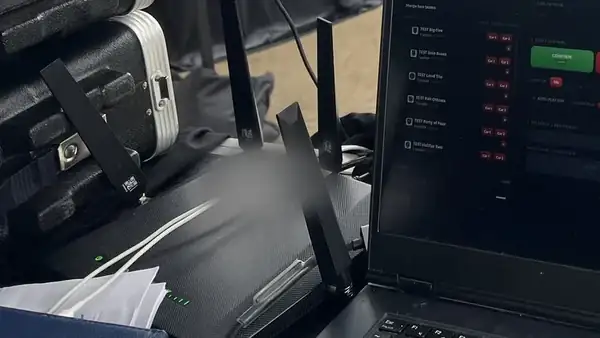
A concourse is hard on microphones and networks. The booth was designed so that no single failure stops the line. Two microphones per car, with automatic failover in about 1.5 seconds if the primary goes silent or disconnects. A no-audio alarm for the technician, and a scripted visualizer that keeps the audience screen moving while a microphone is fixed. Manual score tiers (Good 200, Great 350, Ultimate 500) so every group still gets a result. Hold and resume at any point in the countdown or cheer.
If the network drops
If the network drops, the booth keeps scoring locally and the crew can add teams by hand. The application always starts paused with Auto Play off, so nothing runs before the crew is ready. Automated test coverage grew with the project, from 52 tests early in the summer to more than 130, plus checks run against the live sign-up system before every go-live.
The 2026 season
5 July, Ottawa. Ottawa Rapid FC vs Calgary Wild FC.
23 August, Montréal (Laval). Montréal Roses FC vs Calgary Wild FC.
13 September, Vancouver (Burnaby). Vancouver Rise FC vs Ottawa Rapid FC.
27 September, Calgary. Calgary Wild FC vs Vancouver Rise FC.
4 October, Toronto. AFC Toronto vs Vancouver Rise FC.
17 October, Halifax. Halifax Tides FC vs Montréal Roses FC.
7 November, Ottawa (playoff). Ottawa Rapid FC vs AFC Toronto.
The Final, 14 November
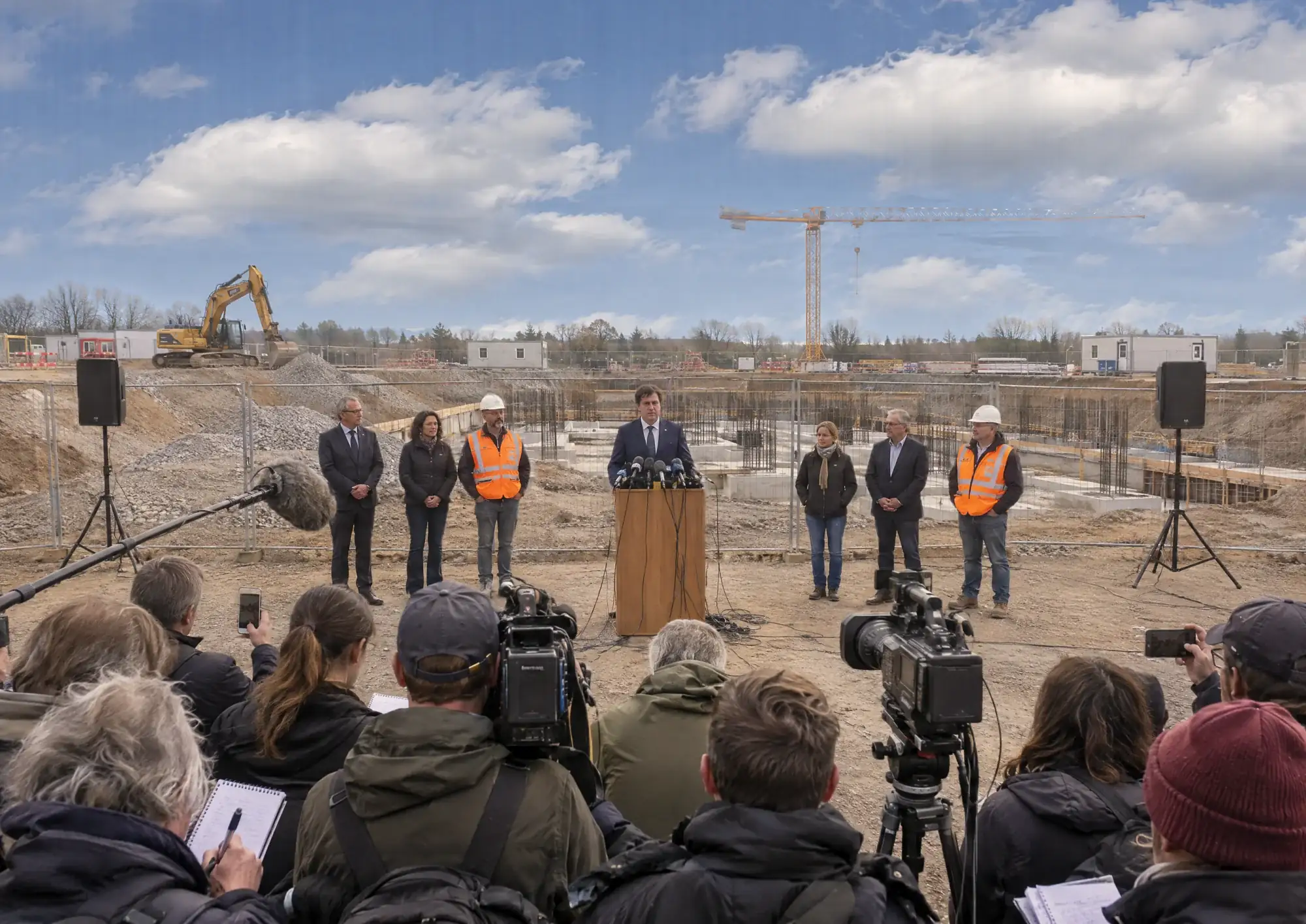
14 November, TD Place, Ottawa. The final game of the season, Montréal vs Toronto.
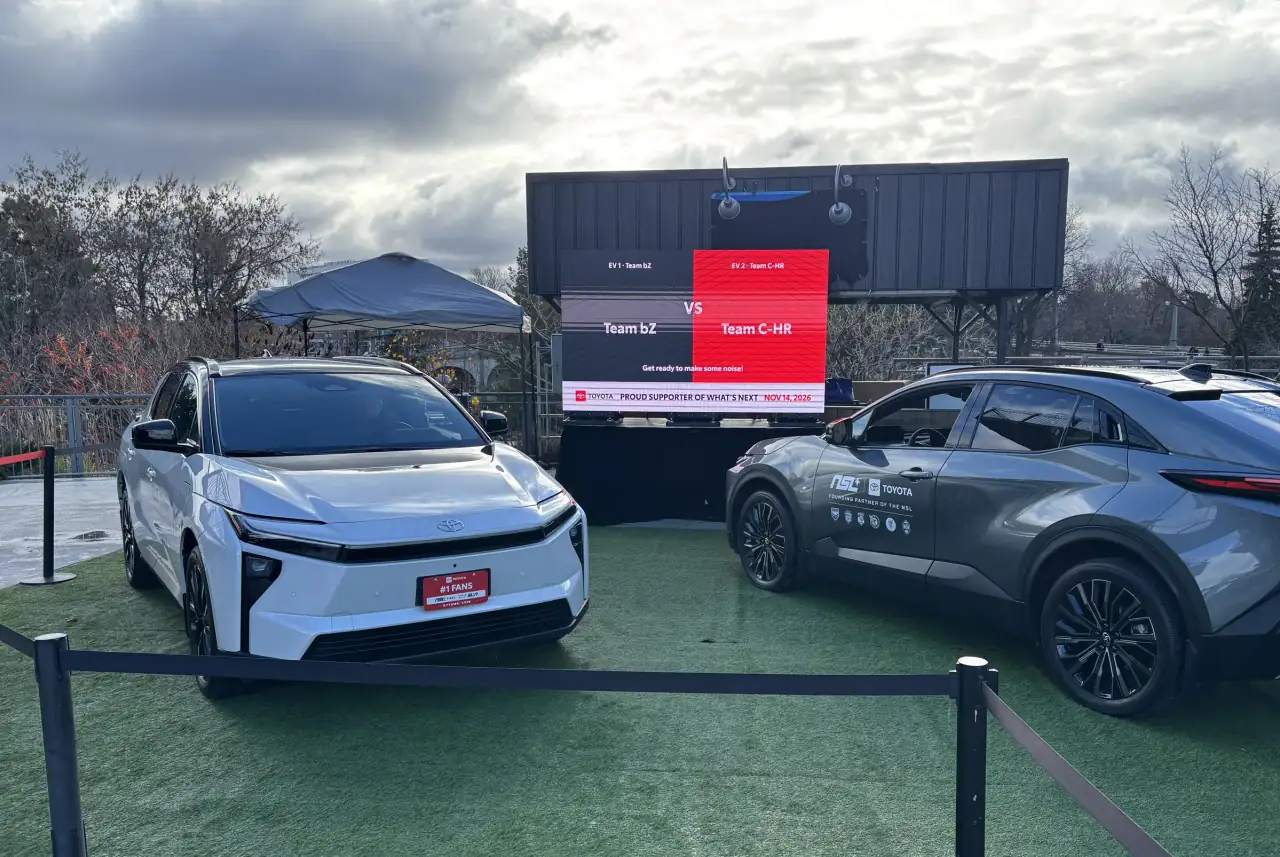
Toyota wanted to step up the activation by making it more of a competition. That is why Toyota brought in two cars.
The activation became a head-to-head. Each cheering team competed to see who could charge their car the fastest with just their voices.
SW ran the technology. The LED screen, the cheer meter that turns each team's voice into charge, and the control position behind the wall. The screen showed Team bZ against Team C-HR, one team in each car.
Fans queued at the Race to Recharge sign to take their turn.
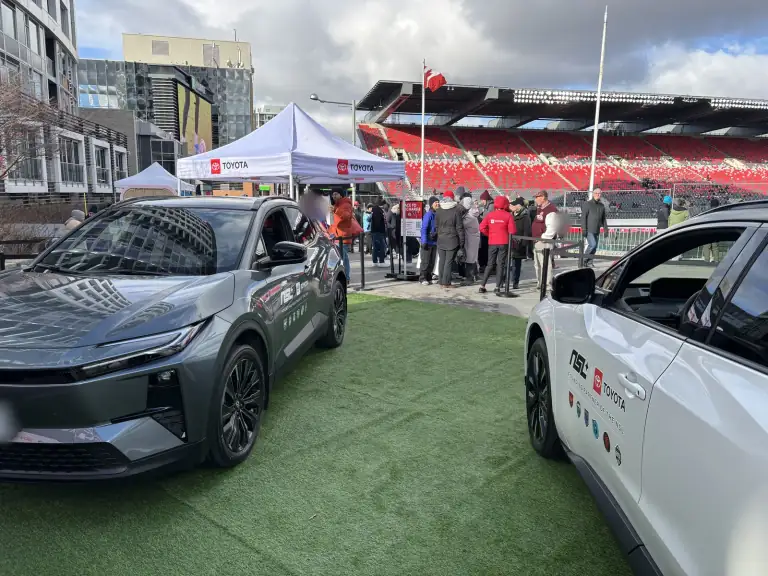
Fans lined up at the Race to Recharge sign, TD Place behind, 14 November.
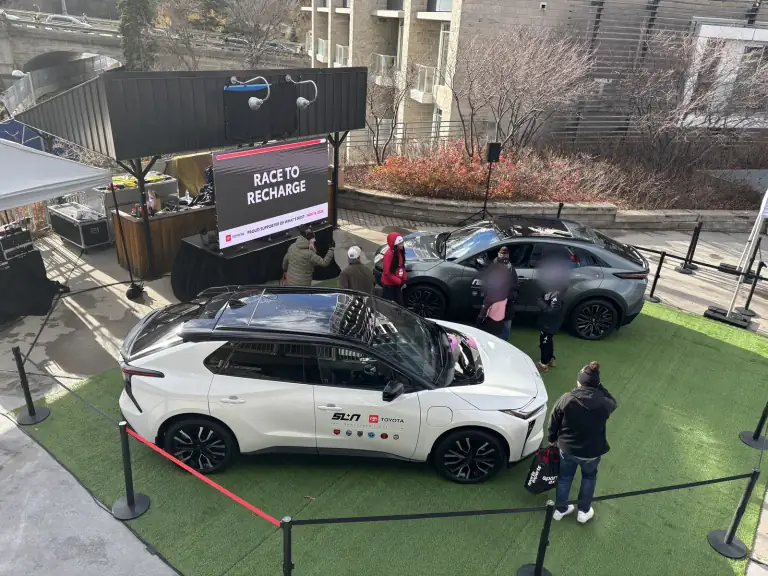
The two cars, the LED screen and the control position, seen from above.
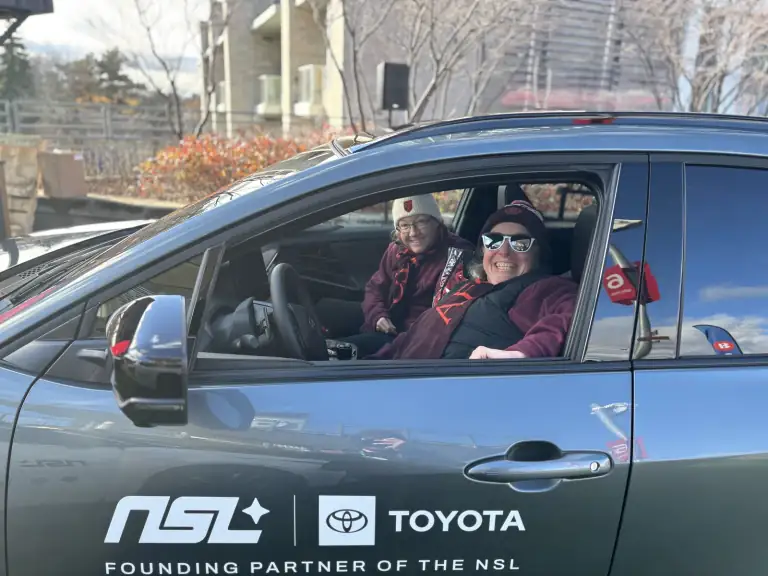
A team in one of the cars at the finale.
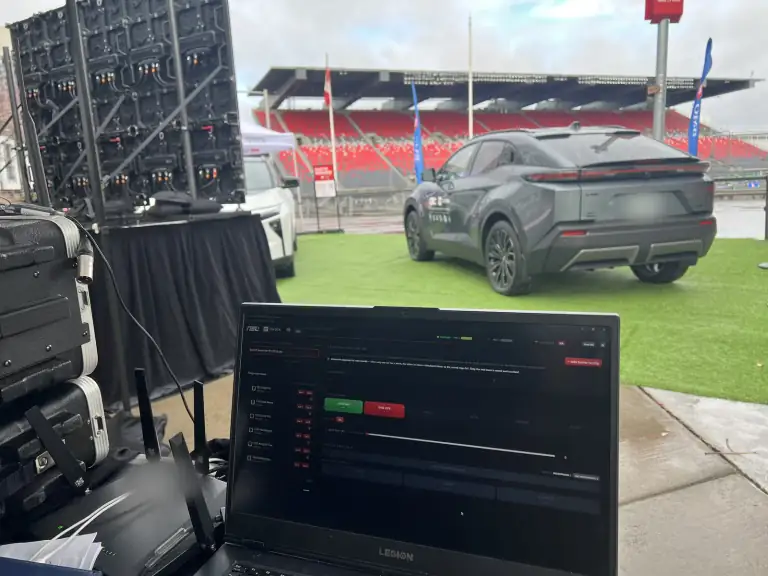
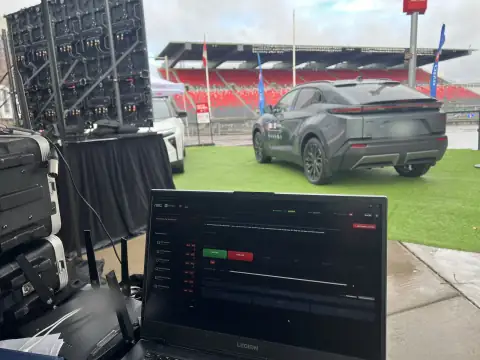
Behind the LED wall: SW's control laptop running the cheer meter, with the stadium beyond.
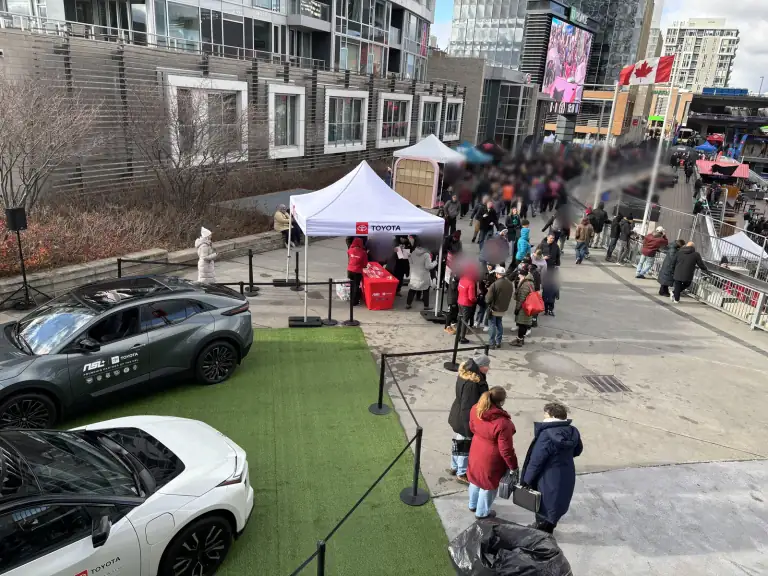
The line of fans along the concourse beside the booth. Children and the far crowd are blurred.
Two cars. Two teams. Voices only.
03 / The Outcome
Six Cities in Fifteen Weeks.
The summer season ran from early July to mid October, one home match per club. Each stop shipped as its own versioned build. A per-city settings revision rolled the booth forward to the new club crests, the RAV4 decal with that city's home club, the date, the beneficiary, and the language, while keeping the audio routing and operator preferences. Builds reached the field team as delta updates to a shared drive, checked file by file, and the previous build stayed beside it as a rollback.
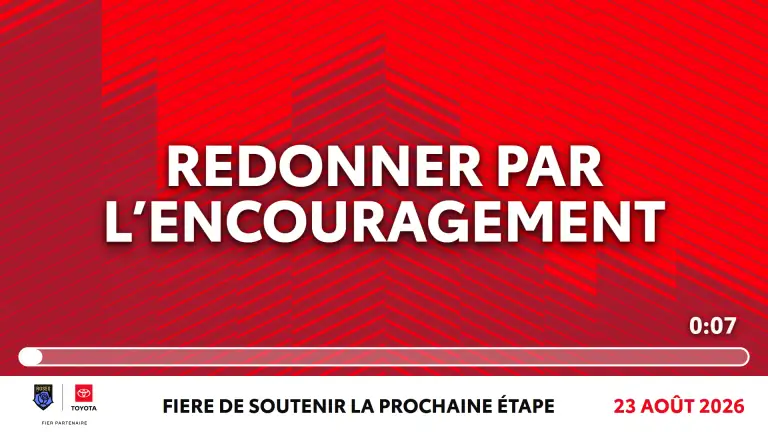
In Montréal, screens, sign-up, and the halftime video defaulted to French, and 54 participants chose French.
In Toronto the videoboard was 880 x 480 rather than 16:9. The screen layout scales to its container, so it fit without a redesign, and the halftime video was re-rendered for the board with its pixel shape verified before delivery. Toronto was the busiest stop: 109 sign-ups and 102 cheers. Vancouver and Halifax had no stadium LED board, so the booth ran on its own screens without a halftime show.
After the summer season closed in October, Toyota extended the program into November under a new name, Toyota Cheer in High Gear, with a new sign-up domain and no donation component. The 7 November playoff ran the solo game. The same control PC then gained a versus mode: two microphones, two scores, one shared countdown and reveal.
Through the 7 November playoff: 389 sign-ups and 357 scored cheers across seven match days.
Treat every city as a release. Versioned builds, per-city settings revisions, and delta updates meant the field team always ran a known build with the last one ready as a rollback.
Build the art in code, not in comps. Live screens built from the client's own artwork files absorbed several rounds of creative review without being rebuilt from scratch, and match the approved art at any screen size.
Design for the bad day. Most of the resilience features exist because a concourse is hostile to microphones and Wi-Fi. They are why the line kept moving.
Go live in order. Schema changes shipped database first, then cloud functions, then the sign-up site, then the booth, so a live sign-up page never pointed at a database that was not ready for it.
Every city a release. The art built in code. Designed for the bad day.
A concourse is hard on microphones and networks.
The booth was designed so that no single failure stops the line.
Planning something like this?
Every event has a start time.
We make sure the technology is ready when it does. Tell us the date, the room, and what has to happen in it. You get a plan and a number back, from the people who would run it.
One of more than 4,000 events SW runs a year.