
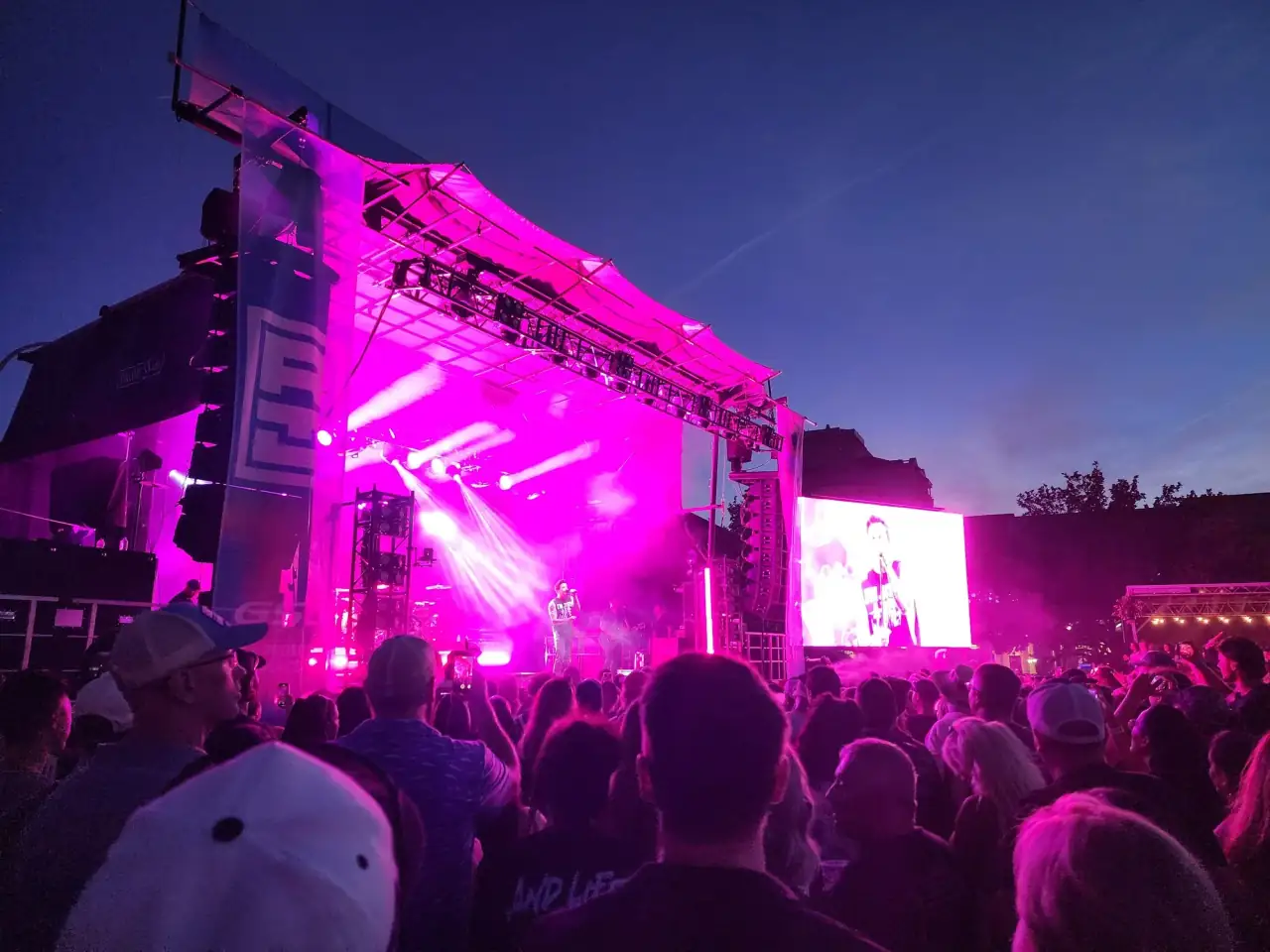
Six Days on Site. Three Days of Show.A Different Band Every Hour.
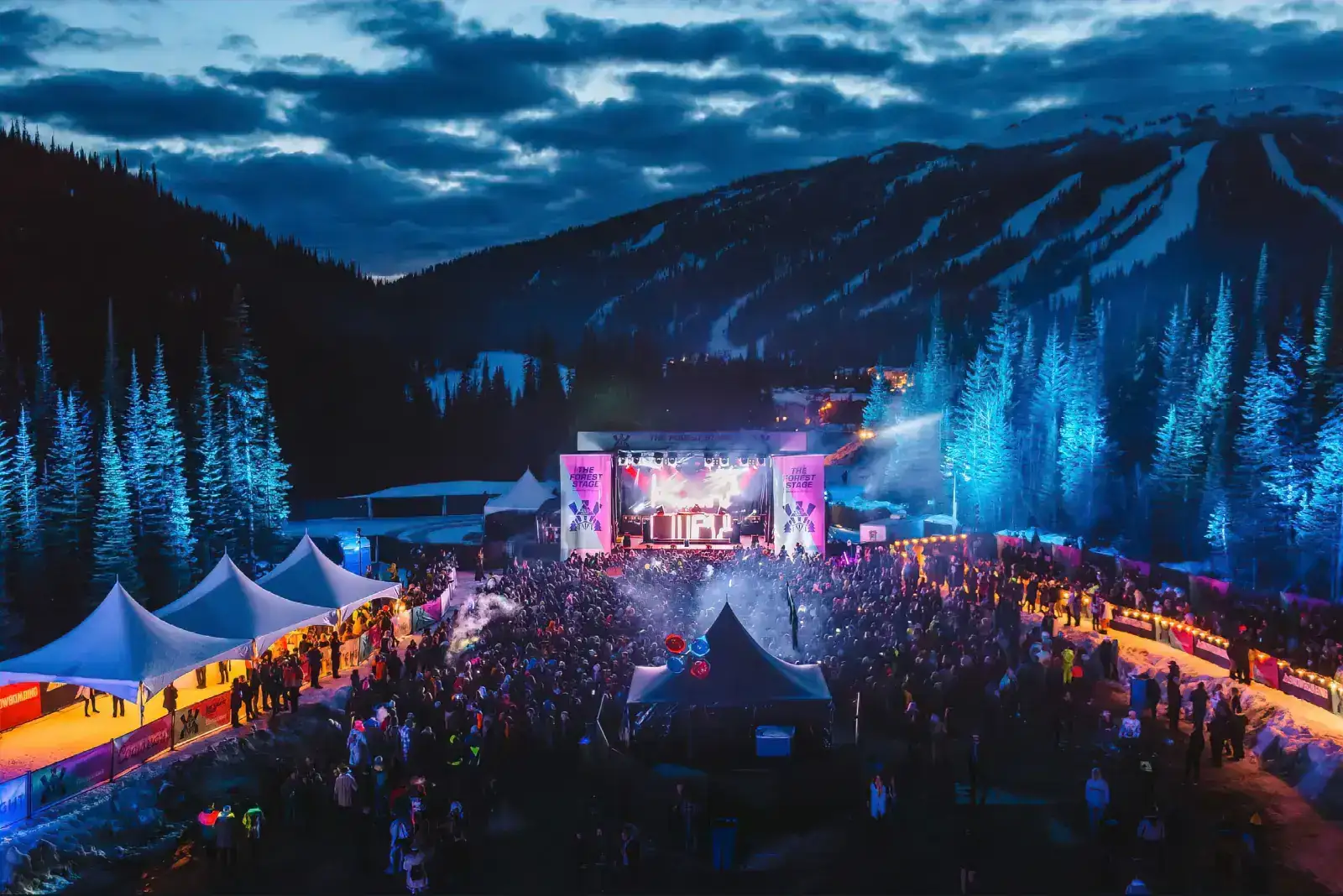
The stage after dark.
- 6 daysOn site, for three days of show
- 3Truss lines over the stage
- 2Front of house desk positions
- 4Phases, build through dismantle
- 8,500+Fans over three days, the promoter's figure
01 / The Brief
A Lot With No Stage, No Roof, No Power and No Walls.
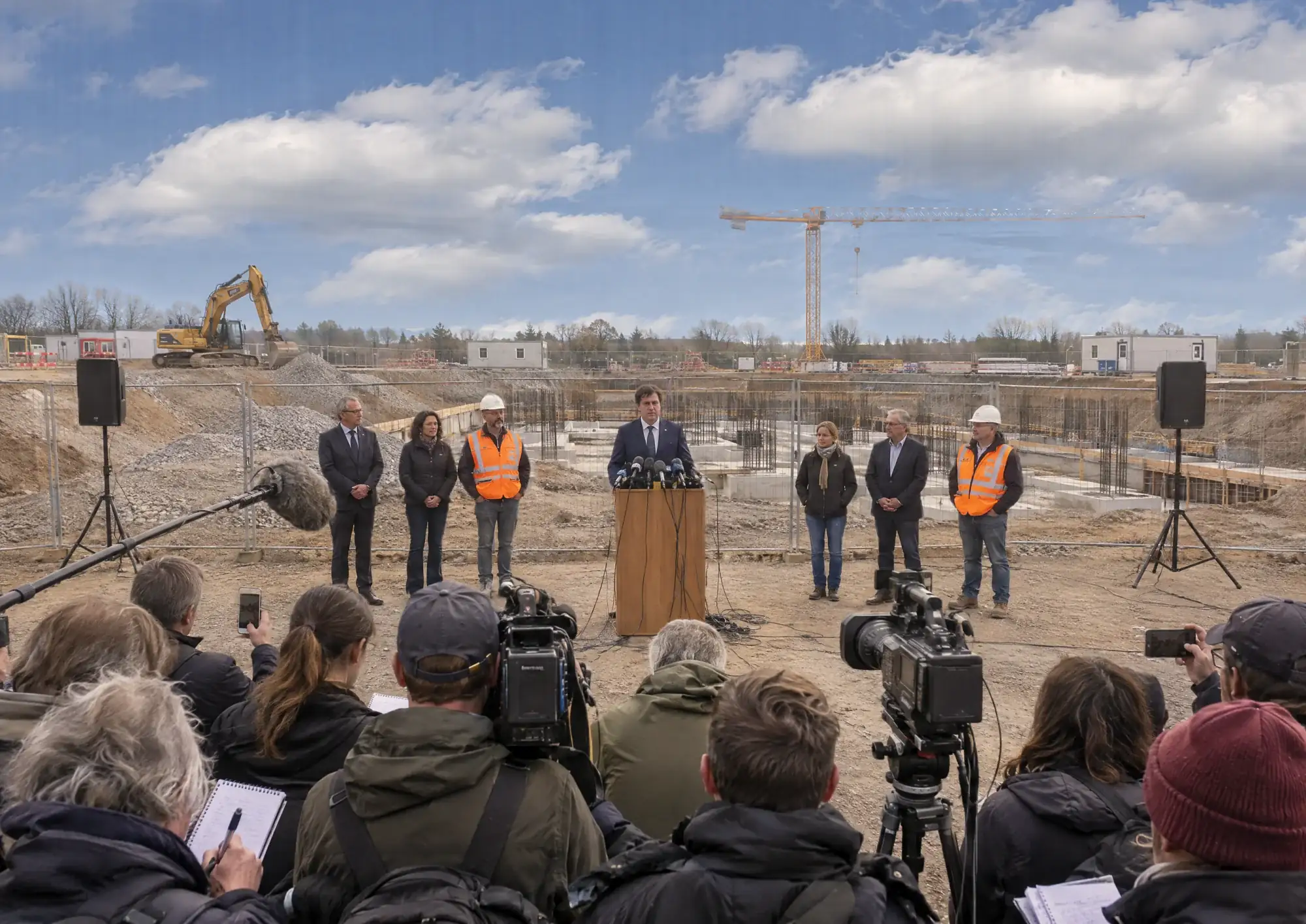
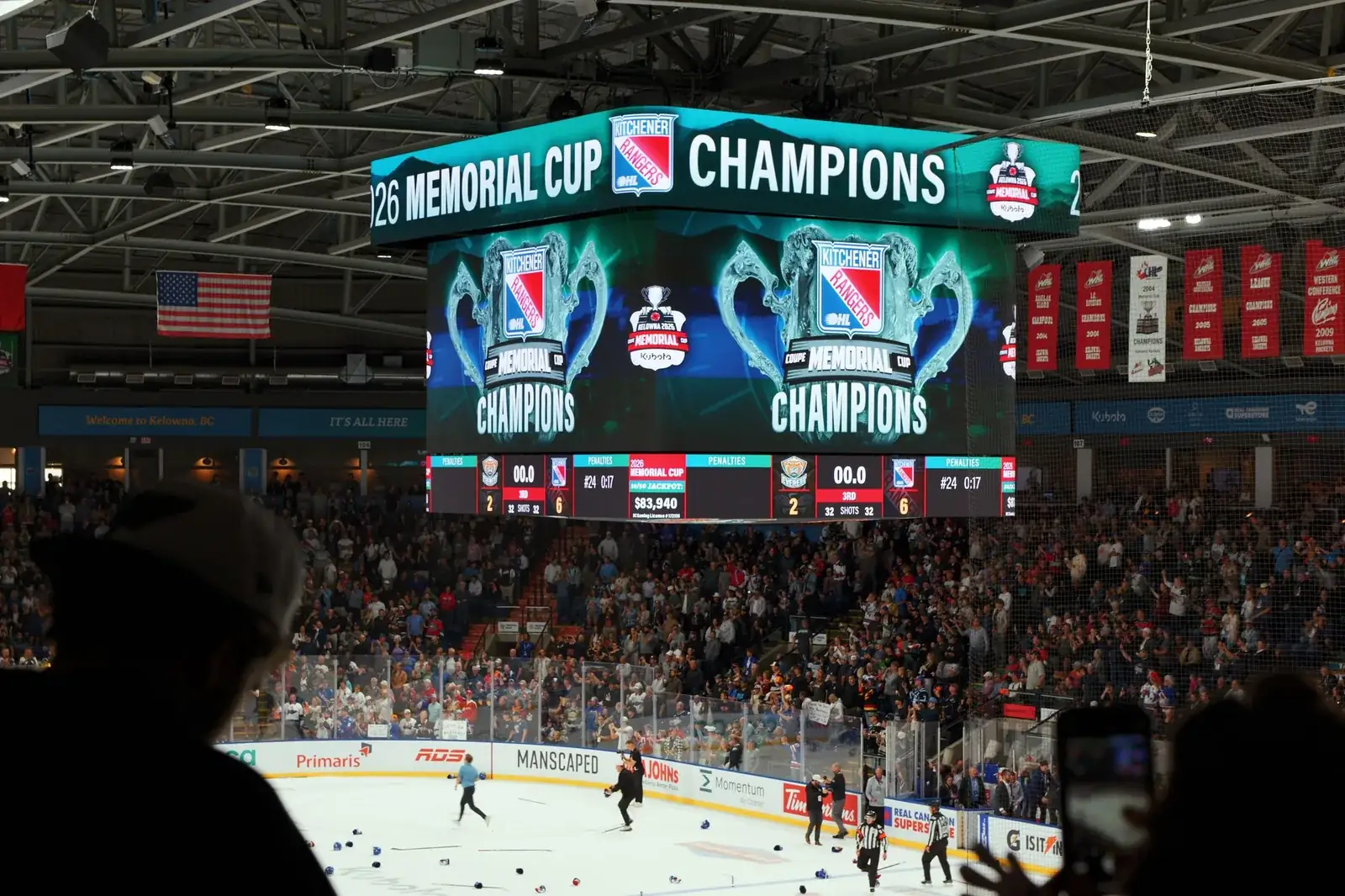
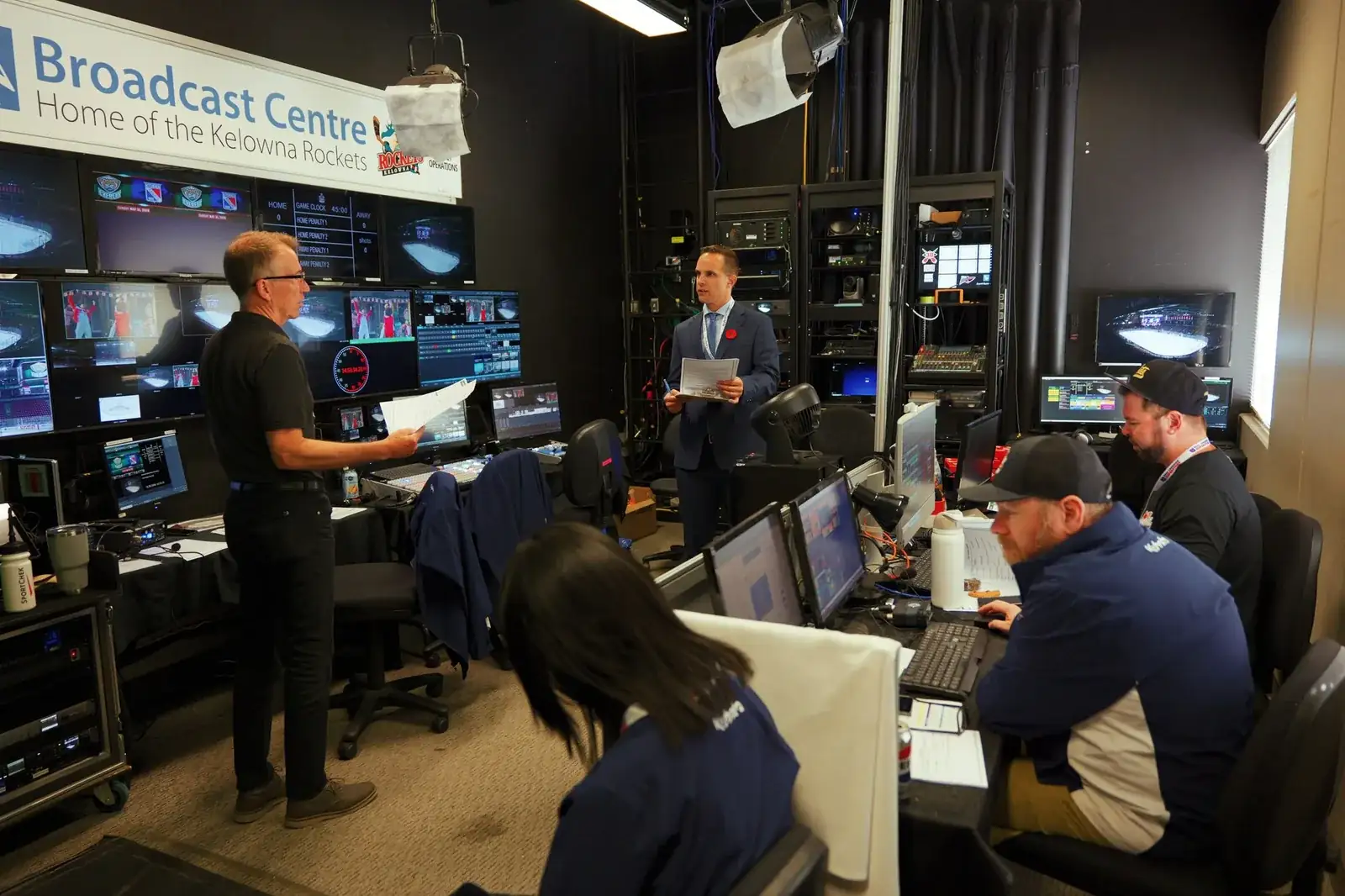
Rock the Lake ran three days in 2025 on an open lot at Prospera Place in Kelowna. SW was on site for six days to deliver three.
Put three days of live music on a lot with no stage, no roof, no power and no walls, beside a lake, and make it work for a different act every hour.
The lot is the problem and the schedule is the other one. Everything that makes a show arrives on a truck and leaves on one. In between, the same rig has to serve acts who have never seen it, whose own crews arrive with their own expectations, and who get a changeover measured in minutes rather than hours.
The event owned the program, the acts and the audience. SW built the stage, the audio, the lighting and the rigging the music happened inside.
02 / The Work
Two Desks. A Stage on a Truck. Three Truss Lines. Four Phases.
Two desks, because a festival is a relay
Front of house is set up twice, and that is the shape of the job rather than a duplication. There is the house position, and beside it a second console kept live and patched for a visiting engineer who wants their own desk under their hands.
A long digital snake runs from the stage to front of house specifically to feed guest consoles. An engineer who arrives with a tour can be given a split and a working position without the house system coming down.
Monitors run from their own console at the side of the stage, with wedge and in-ear mixes for the acts that travel with them.
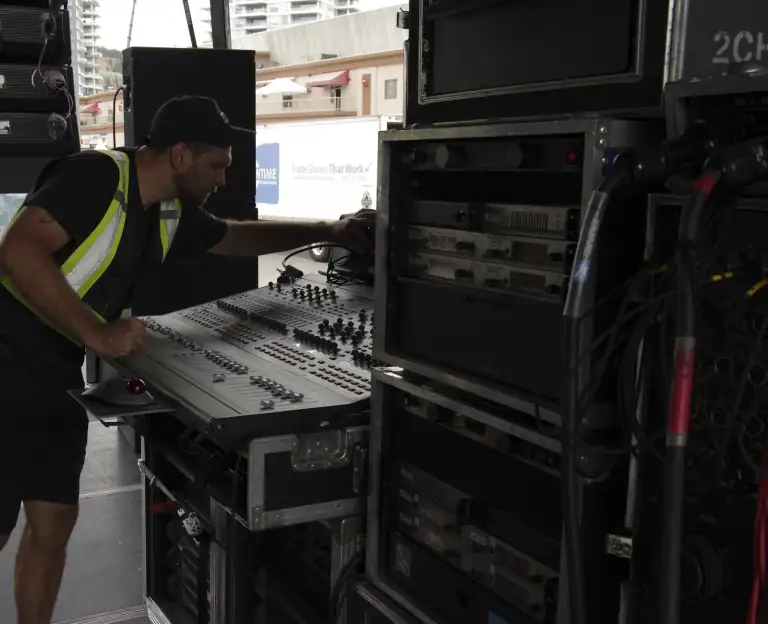
Measurement is part of the kit rather than an extra: an analysis rig and a measurement microphone, so the system is tuned to the lot it is standing on and not to the last one.
A stage that arrives as a truck
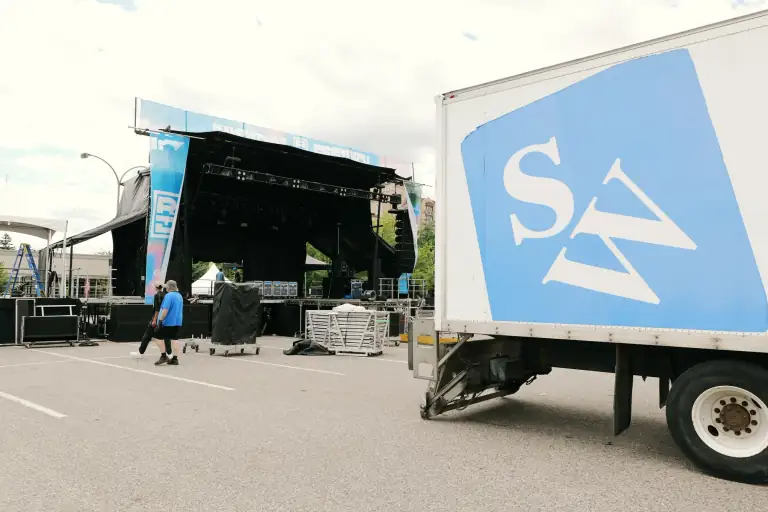
The main stage is a mobile deck that unfolds and self erects, with covered wings on both sides for the gear that has to stay dry and a wind wall.
Around it, everything an act or a photographer stands on was built: rolling risers that move between changeovers and a thrust out into the audience.
Front of house sits under its own tent, ballasted rather than staked, because a lot is not a field.
Lighting in three lines, and weather in everything
The rig hangs on three truss lines, downstage, midstage and upstage, on pre rigged truss that flies as a unit. Moving heads and washes, blinders and strobes for the moments a festival crowd expects, and haze so the beams have something to cut through after dark.
One lighting desk runs all of it, with backup in place because a festival does not stop for a failure.
The weather is designed into the rigging rather than hoped about. Rain hoods over the line array and over every motor, and a wind wall on the stage. Beside a lake, the forecast is a production input.
Four phases, one team
The work ran in four phases: the stage and structures first, then audio and lighting, then the show days, then dismantle, with the same audio and lighting leads on site from build through show.
03 / The Outcome
Six Days on the Lot for Three Days of Music.
This case records what was contracted and built. It does not claim what the last night sounded like.
Six days on site. Two desks at front of house. Three truss lines. Four phases.
A festival is a relay.
The system has to survive every handover.
Planning something like this?
Every event has a start time.
We make sure the technology is ready when it does. Tell us the date, the room, and what has to happen in it. You get a plan and a number back, from the people who would run it.
One of more than 4,000 events SW runs a year.