Three Editions. Three Truss Lines.Six Days on Site. A Ball Diamond Again on Monday.
- 3Consecutive editions built
- 3Truss lines, plus a ground package
- 6 daysOn site, to deliver three
- MondayIt is a ball diamond again
01 / The Brief
A Ball Diamond With No Infrastructure and No Roof.
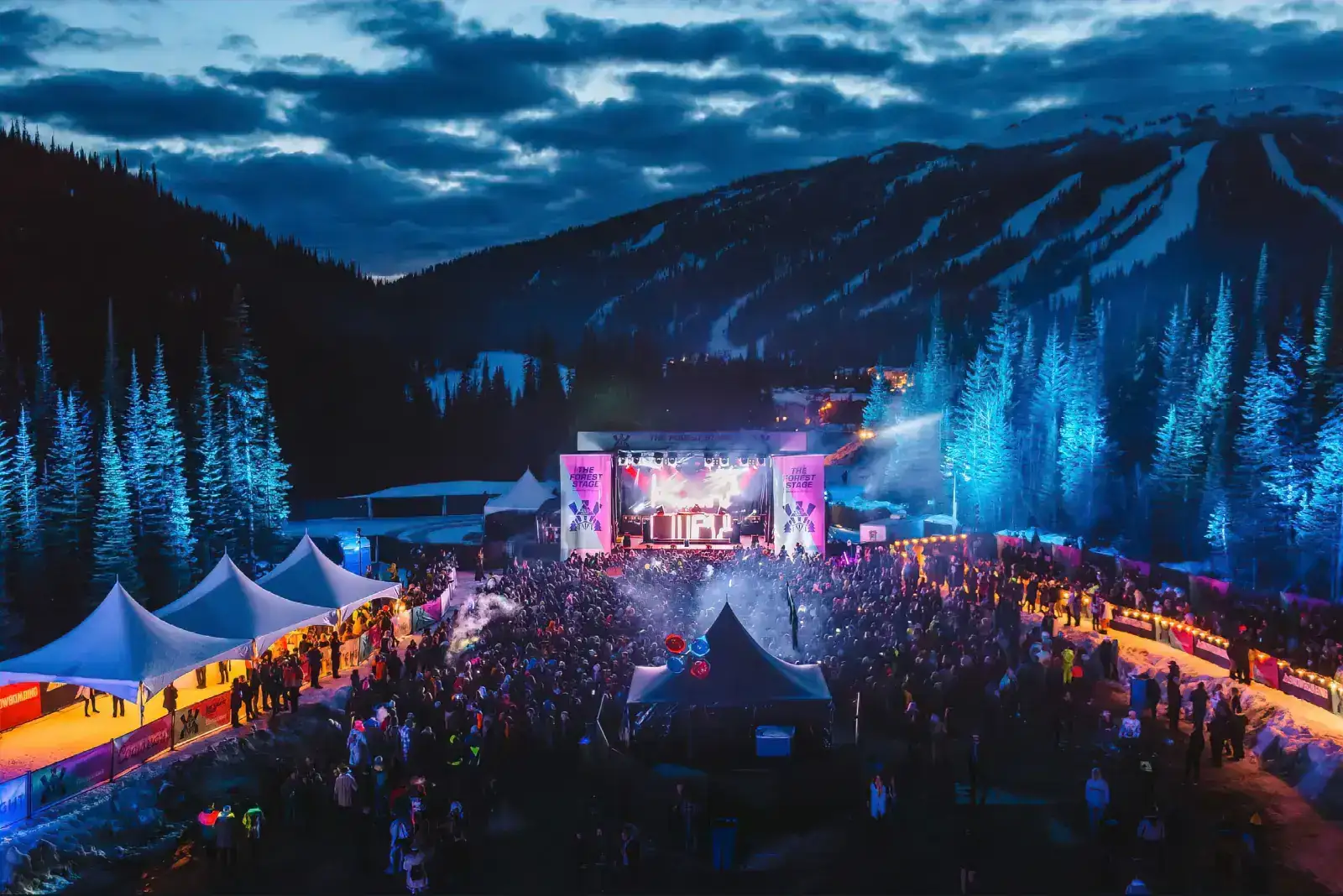
Denim on the Diamond runs at City Park in Kelowna. The 2024 edition spent six days on the ground to deliver three days of music.
The site is the first problem and the bill is the second.
A ball diamond has no infrastructure and no roof, so the stage, the power, the audio and the lighting are all imported and all exposed. The 2024 edition ran three days, which means the build stays standing through whatever the Okanagan does to it.
Then the bill. A multi-act festival day is a sequence of changeovers, and every act rolling through needs its own backline, its own monitor mix and its own line check inside a window the audience is not supposed to notice. The headline set is the straightforward part. The twenty minutes before it is the job.
The promoter runs the festival. SW runs the technology and the logistics underneath it.
02 / The Work
A Stage, a Rig, a Screen and a Site, All Brought In.
The stage, and everything bolted to it
A covered mobile stage trucked in from outside the area, with a wind wall, covered wings either side, and a catwalk running out from the deck so an act can get past the barricade and into the crowd. Four rolling risers move between changeovers. Behind it, a decked backstage wrap-around with handrails and two wheelchair ramp units, because the people working a stage are not all able to take a stair.
Barricade at the front, with a gate in it
Aluminium barricade across the front of house line including the catwalk, with a gate where security can get someone out of the crowd without the barrier coming down.
The rig above
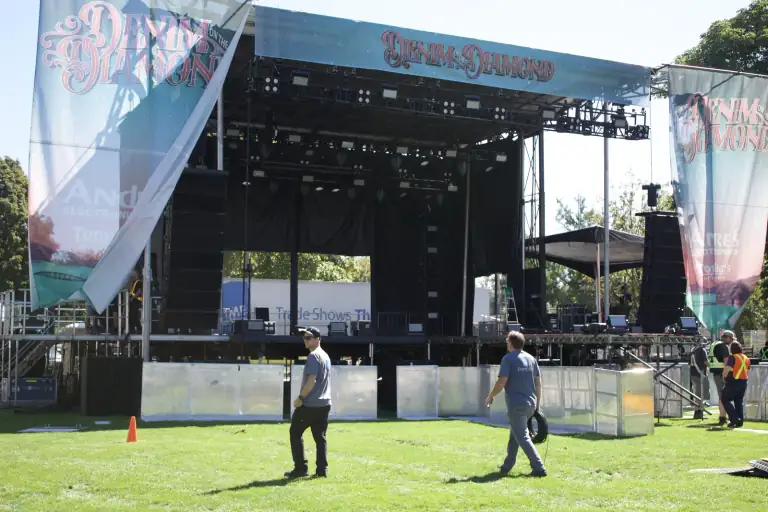
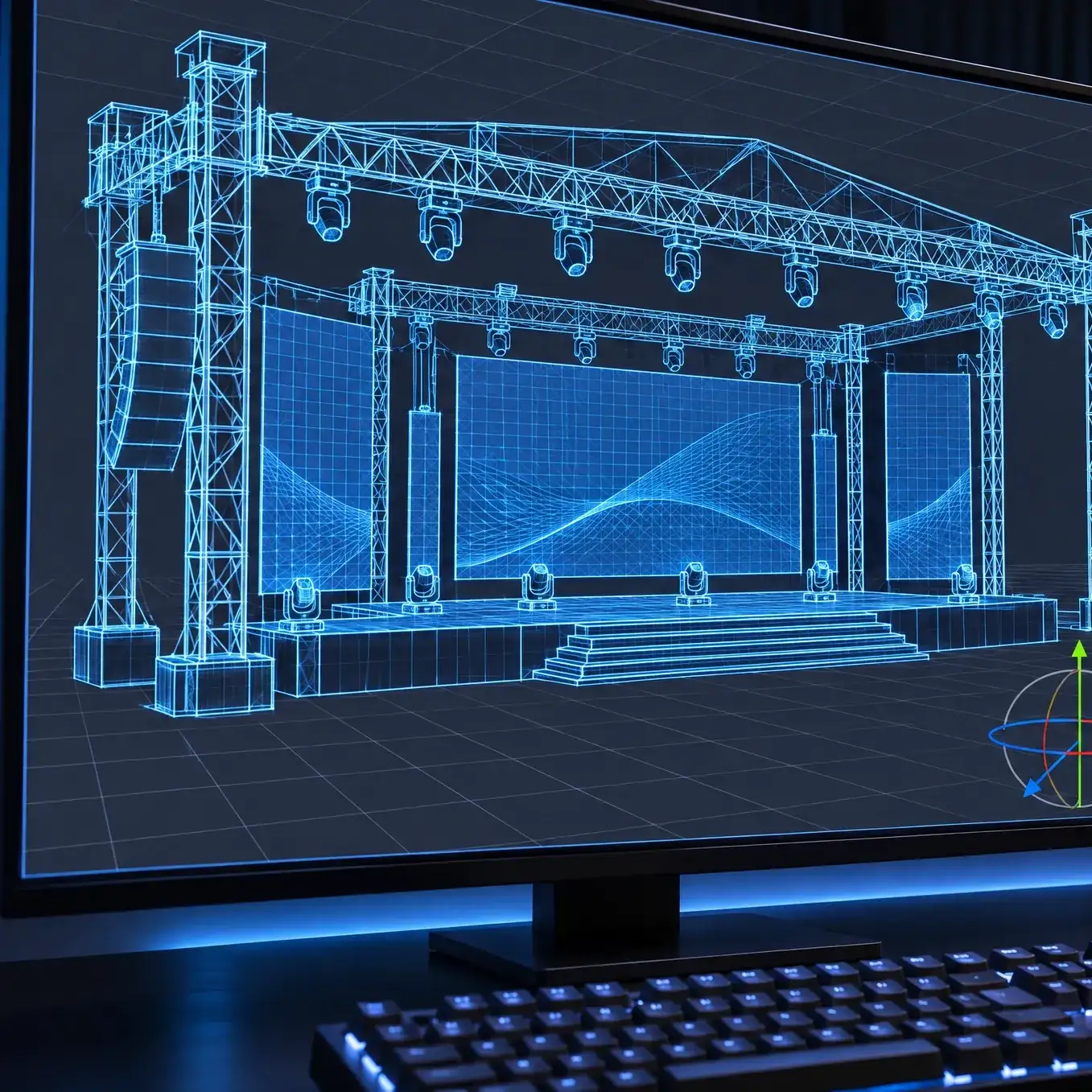
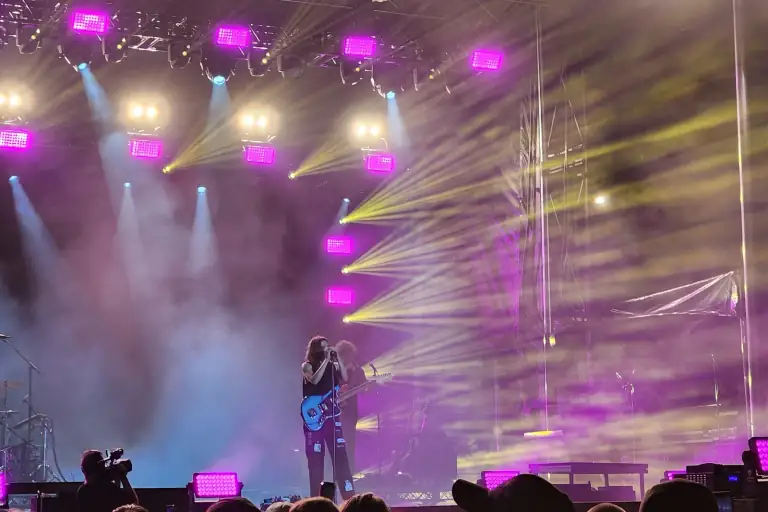
Three truss lines, downstage, midstage and upstage, with a further package rigged at ground level. Moving heads, beam fixtures and blinders across all three, colour wash on the banners and the backdrop, and haze worked through the beams, which on an outdoor stage is a design decision rather than an accident. Two followspots ran from the field with their own operators.
Audio built for a field, not a room
Line arrays flown either side of the stage opening with subs beneath them, and compact arrays doing the work the mains cannot: lip fill for the people at the barrier and out fill for the spread across the ground. An open site gives nothing back, so coverage is constructed rather than borrowed from walls.
Two control positions at each end, which is what a multi-act bill needs
A main desk at front of house and a second one beside it, and the same again at monitors. An engineer arriving with a touring act can be given a working position without the house system coming down, and that is the difference between a changeover the audience notices and one it does not.
Backline, act by act
SW's production record for the 2024 edition carries per-artist backline documentation across the touring bill, one set per act. This is the half of a festival nobody photographs: the right instruments and the right amplification staged and ready for each changeover, so the gap between acts stays a gap.
Lighting control on the grass
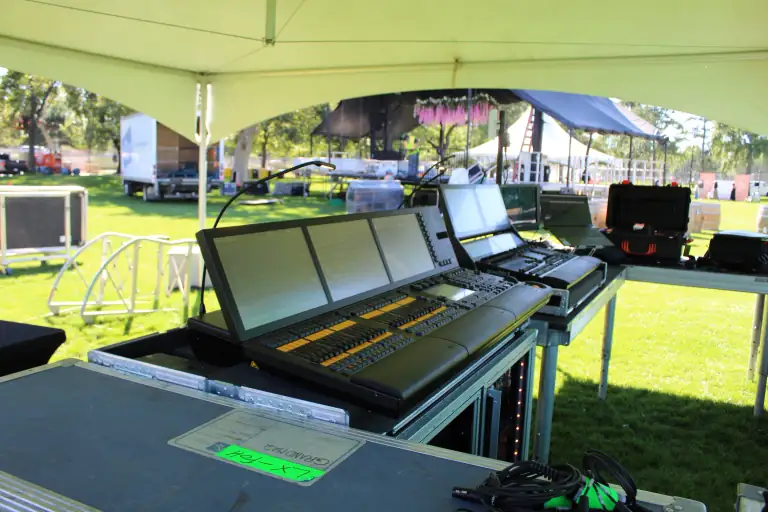
Two grandMA desks, run from a position under a tent at the field edge rather than from any room, because there is no room. The photograph below is of that position.
Identity across a bare site
Full-height scrim walls either side of the stage opening carrying the festival identity and its sponsor marks. That is how a municipal ball diamond reads as a branded festival from the back of the field.
The screen is a trailer
A field has nowhere to hang a screen, so the screen drove itself in. SW's mobile LED trailer parked beside the stage, levelled on a ground plate and fed from its own controller, which is the whole video installation in one movement rather than a day of ground support.
Four cameras fed it. One at front of house on the long shot, one in the pit for the close work, and two remote heads on the stage itself for the angles a camera operator cannot stand in. All of it cut live on an eight-input switcher that recorded every camera as it went, with graphics and playback from their own machines and a wireless comms ring so the cut could be called.
Two video leads and two camera operators ran it across the three show days. On a bill that changes act every hour, the screen is how the back of a field sees a performance at all.
The site, not just the stage
The part of this job that never reaches a photograph is that the whole site ran on power SW brought to it. A generator at the stage, distribution out from it, and a separate vendor supply with panels and protected outlets for the traders who arrive with their own equipment and no idea what is available.
Then the lighting nobody looks at and everybody uses. Floods over the bars, the merchandise tent, first aid, bag check, the front gate and the washrooms, and brighter heads where the exit route needed to read after dark. Cable tray across every path a person walks on.
A certified electrician was on site through the build, the show days and the dismantle, and the job carried its own electrical permit. On a municipal park with no infrastructure, that is not paperwork. It is the difference between a temporary electrical system and an improvised one.
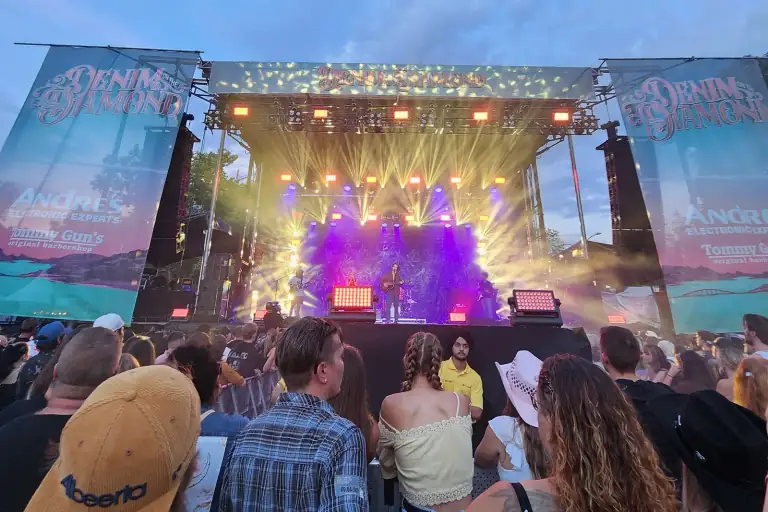
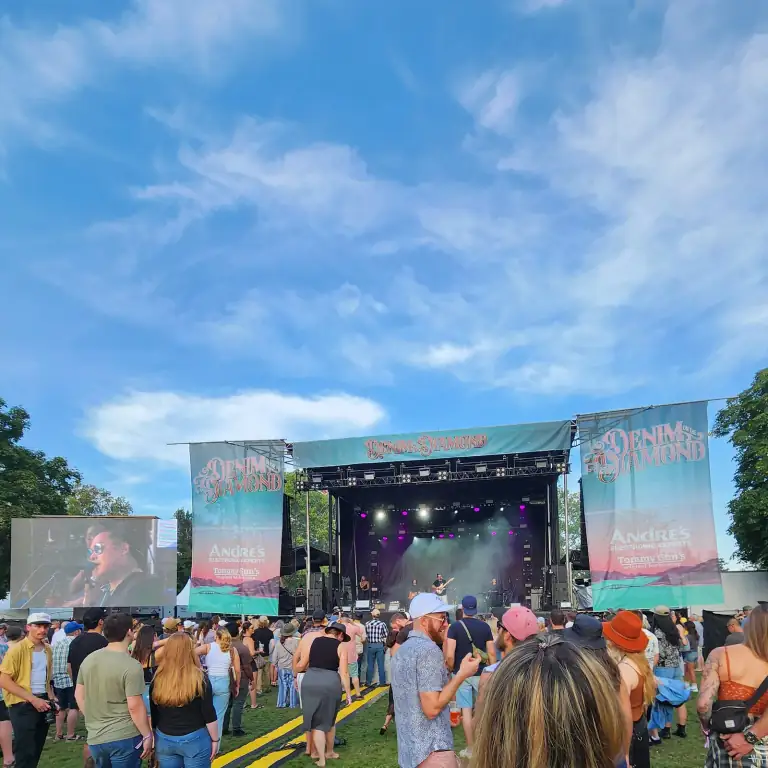
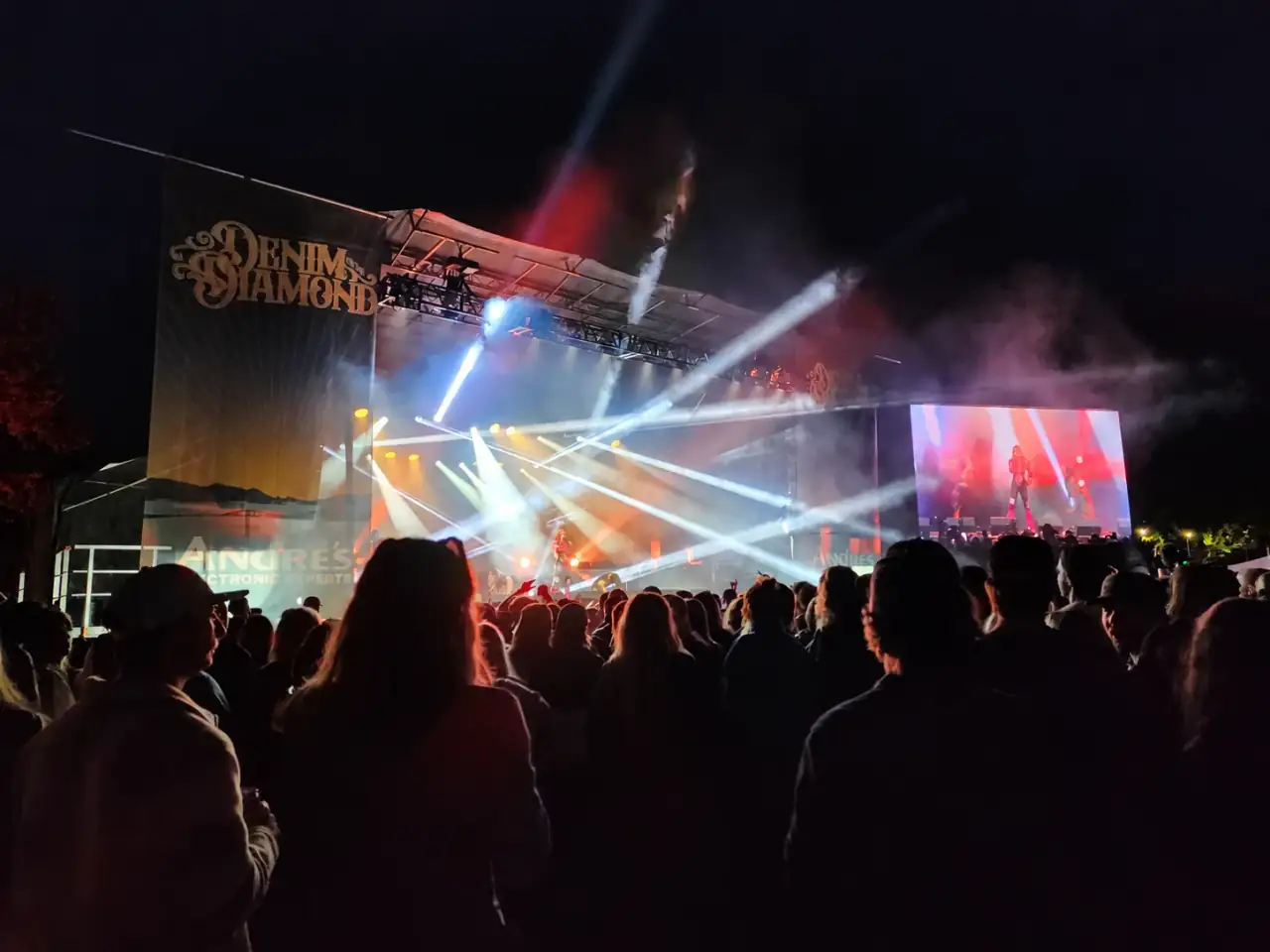
The stage during an afternoon set, the LED screen beside it carrying the camera cut.
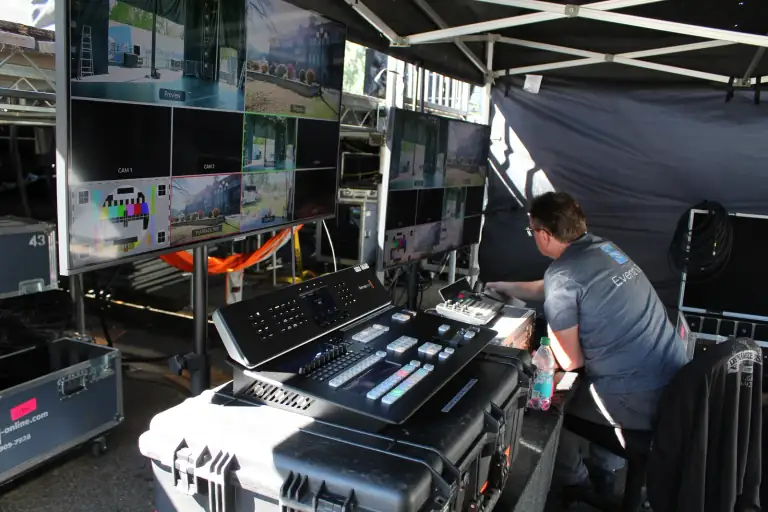
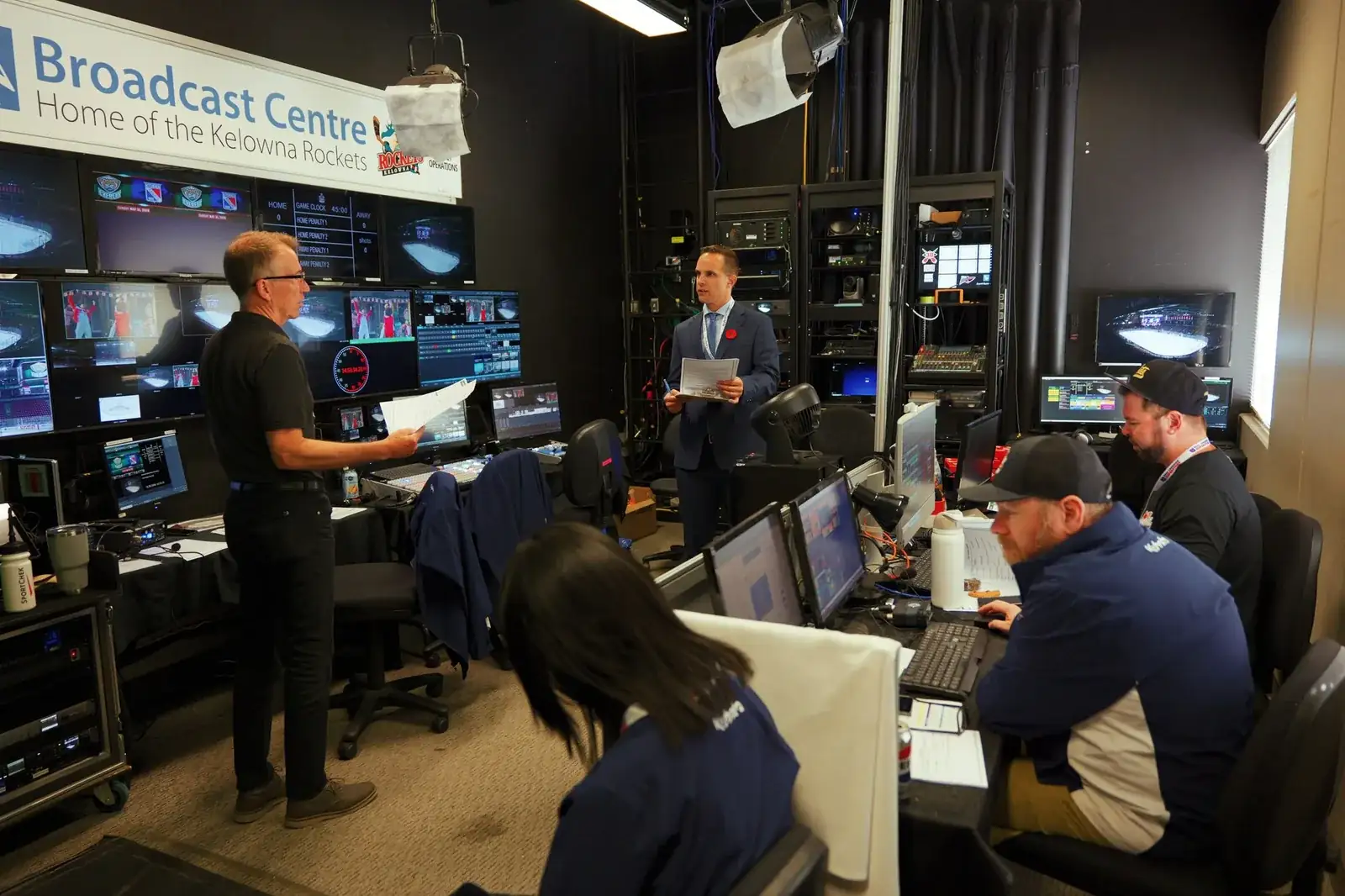
The technology behind the broadcast and video screen at Denim on the Diamond.
03 / The Outcome
Three Editions, and a Ball Diamond Again Every Monday.
Three years is the outcome. A festival that brings a supplier back for a second edition liked the first one. A festival that brings them back for a third has stopped thinking about it.
The music, the crowd and the weekend belong to the promoter and the artists. SW's part is that a ball diamond became a venue three times, and was a ball diamond again each Monday.
Three editions. Six days on site to deliver three. A ball diamond again on Monday.
The headline set is the straightforward part.
The twenty minutes before it is the job.
Planning something like this?
Every event has a start time.
We make sure the technology is ready when it does. Tell us the date, the room, and what has to happen in it. You get a plan and a number back, from the people who would run it.
One of more than 4,000 events SW runs a year.