Twenty-Two Sessions. Three Days.A Floor That Never Closed.
- 74 ftPanoramic LED wall
- 3 daysOf live, streamed sessions
- 22Sessions across three days
- 20Crew positions
- $19.2MEconomic impact, the show's own figure
01 / The Brief
The Hardest Room in the Business.
Canada's Farm Show is one of North America's largest agricultural shows: exhibitors, producers, and international buyers into Regina for three days every year. Manufacturers launch equipment there.
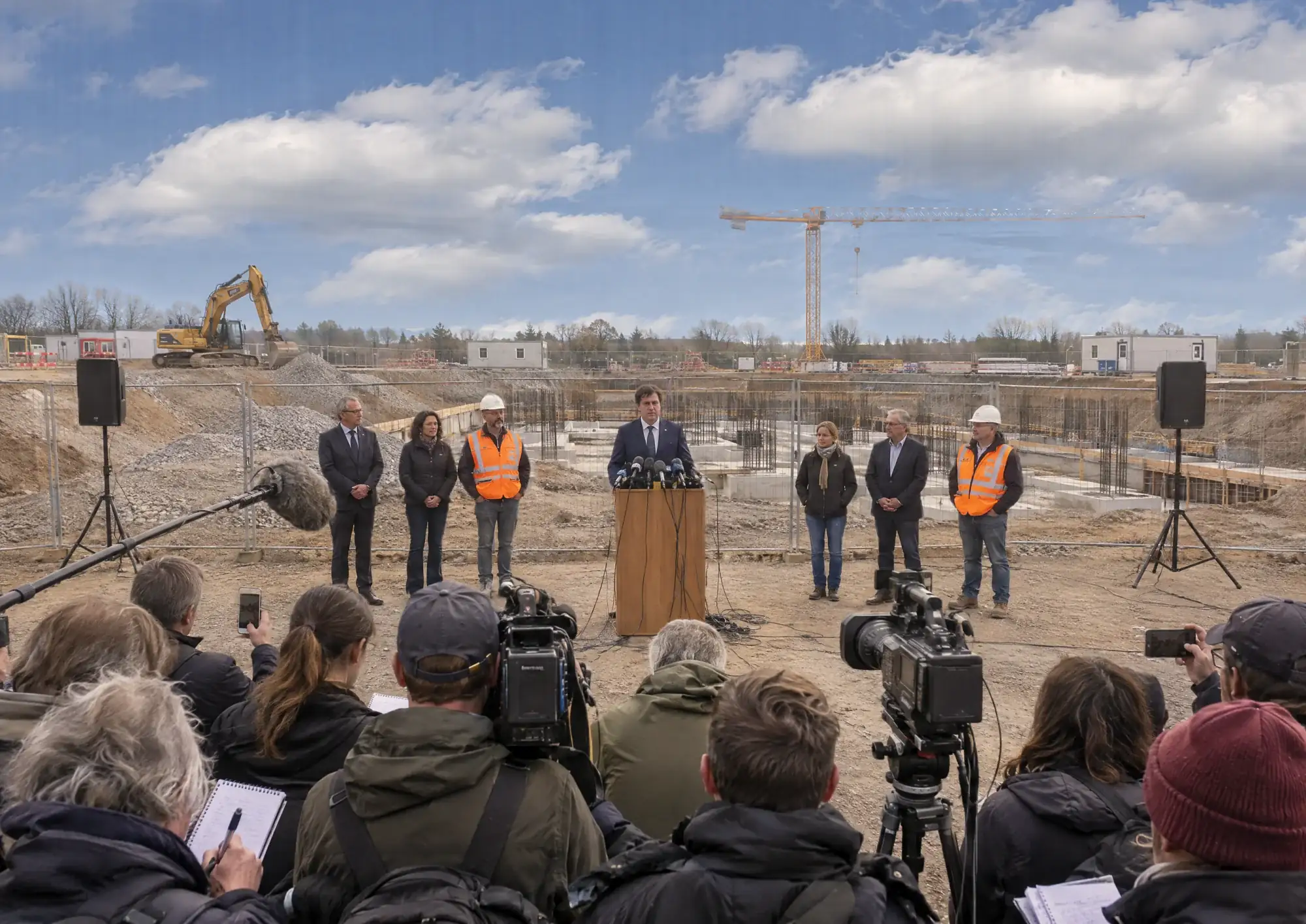
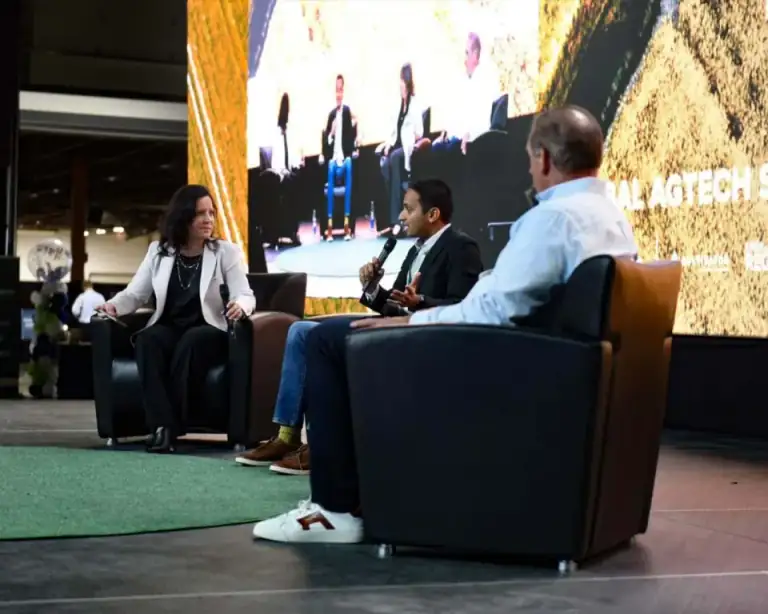
The Launch Pad is the part of the floor where that happens on a stage: product announcements, keynotes, industry panels, a premier's breakfast, and a pitch competition, presented under sponsor branding and streamed live.
A trade show floor is the hardest room in the business. It is loud, it is bright, it never goes dark, and the audience is walking past rather than sitting down. Nothing can be dimmed for a video. Nothing can wait for a room to settle. And the schedule belongs to the show, not to the stage.
The show owned the program, the exhibitors, and the running order. SW built the stage, cued it, and put it on air.
02 / The Work
Four Surfaces. One Crew. Cued Per Session.
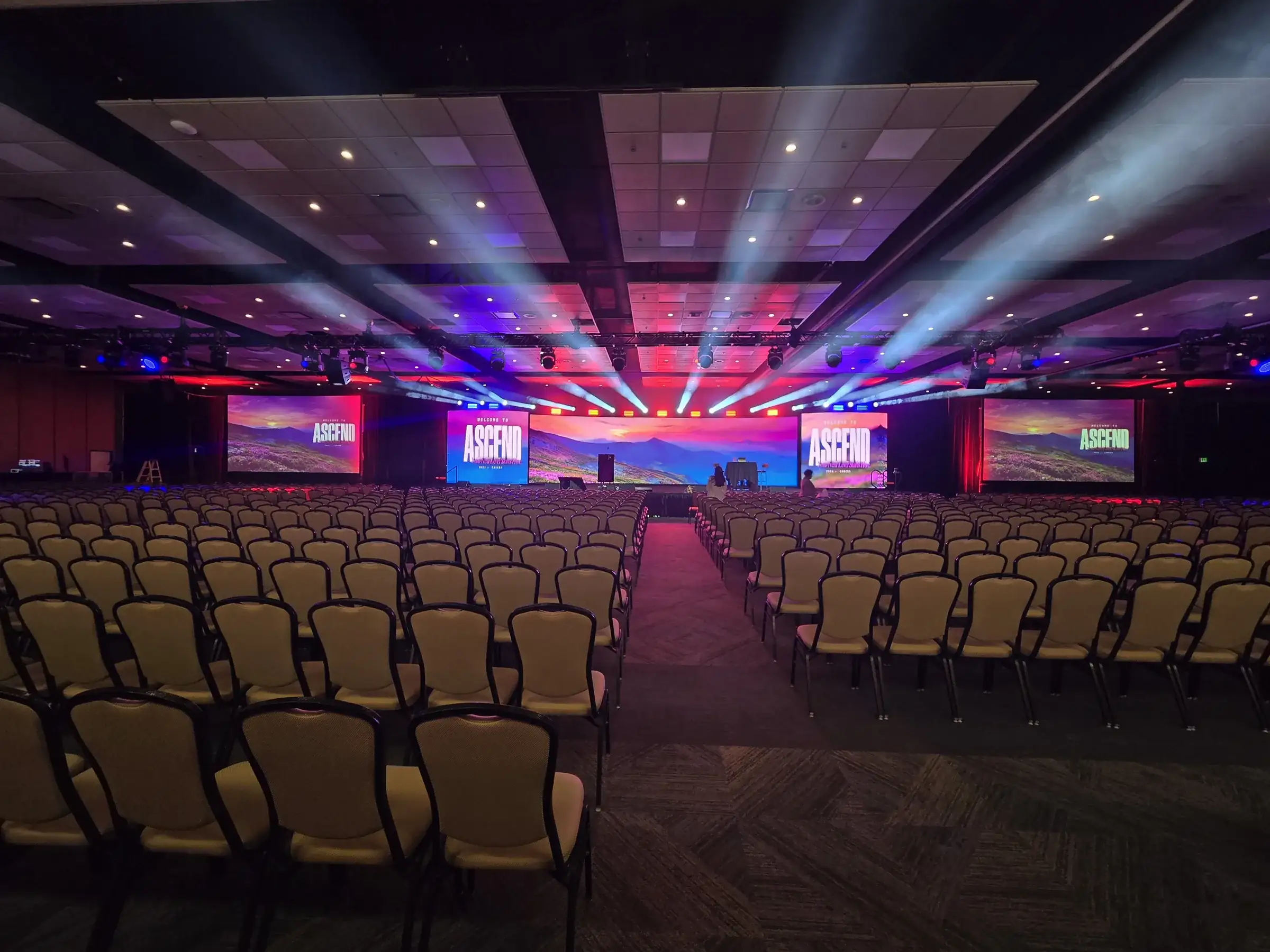
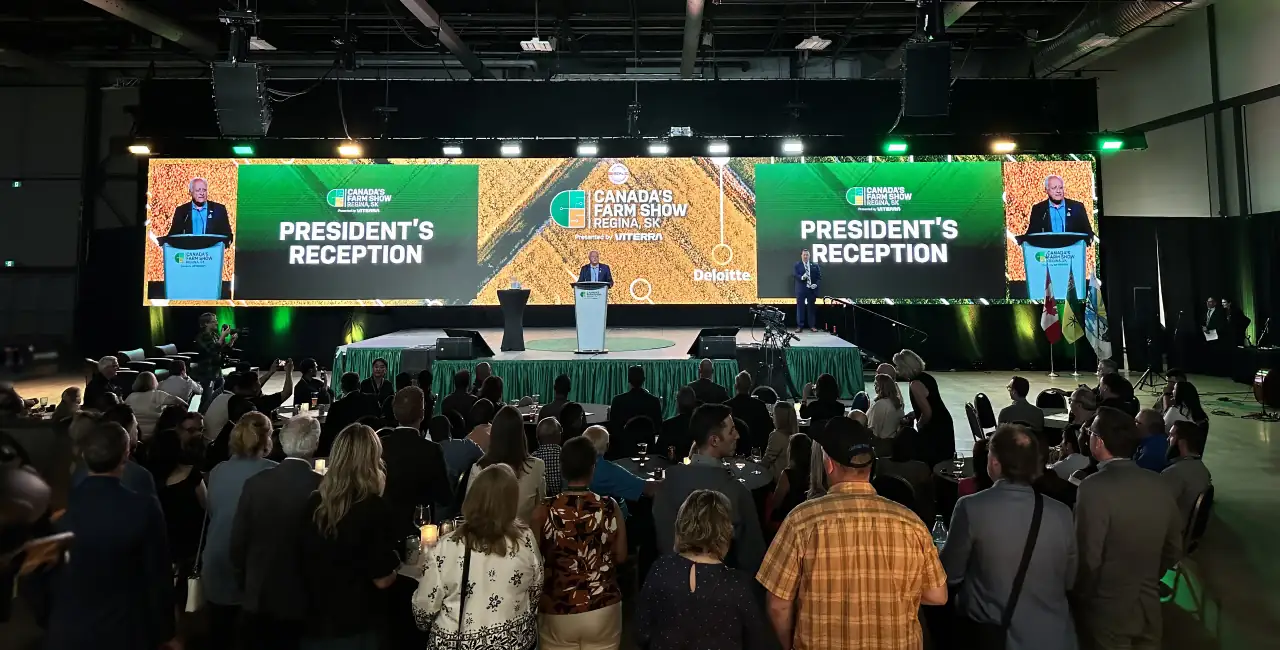
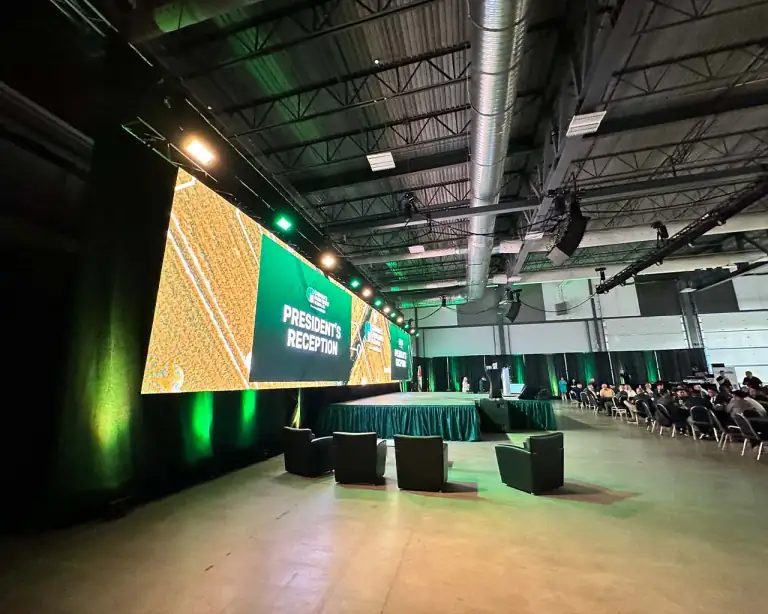
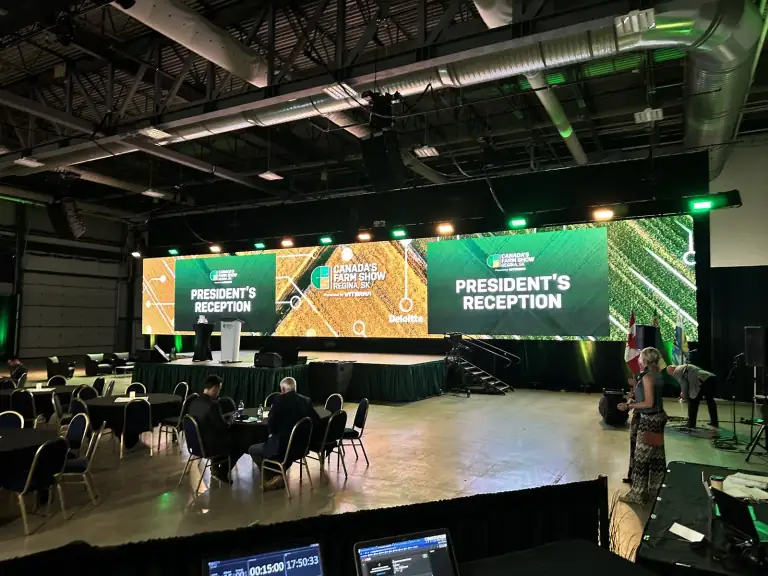
A 74-foot panoramic LED wall, because the room cannot be darkened. On a floor with permanent hall lighting and exhibitor stands lit to their own standard, projection has nothing to fight with. LED at that width carries IMAG, presentation content, and full-screen motion between sessions without asking the building for anything.
Four surfaces, cued per session
The panoramic wall, two side screens carrying audience-left and audience-right feeds, and a teleprompter for speaking notes. The run of show carries a column for each of them against every session, which is what makes this a cued show rather than a stage with a screen behind it.
Countdowns, transitions, and sponsor content as scheduled cues. Five-minute countdown clocks ran to the side screens ahead of launches, transition clips between segments, and sponsor commercials placed in the running order. All of it timed against a program the stage did not control.
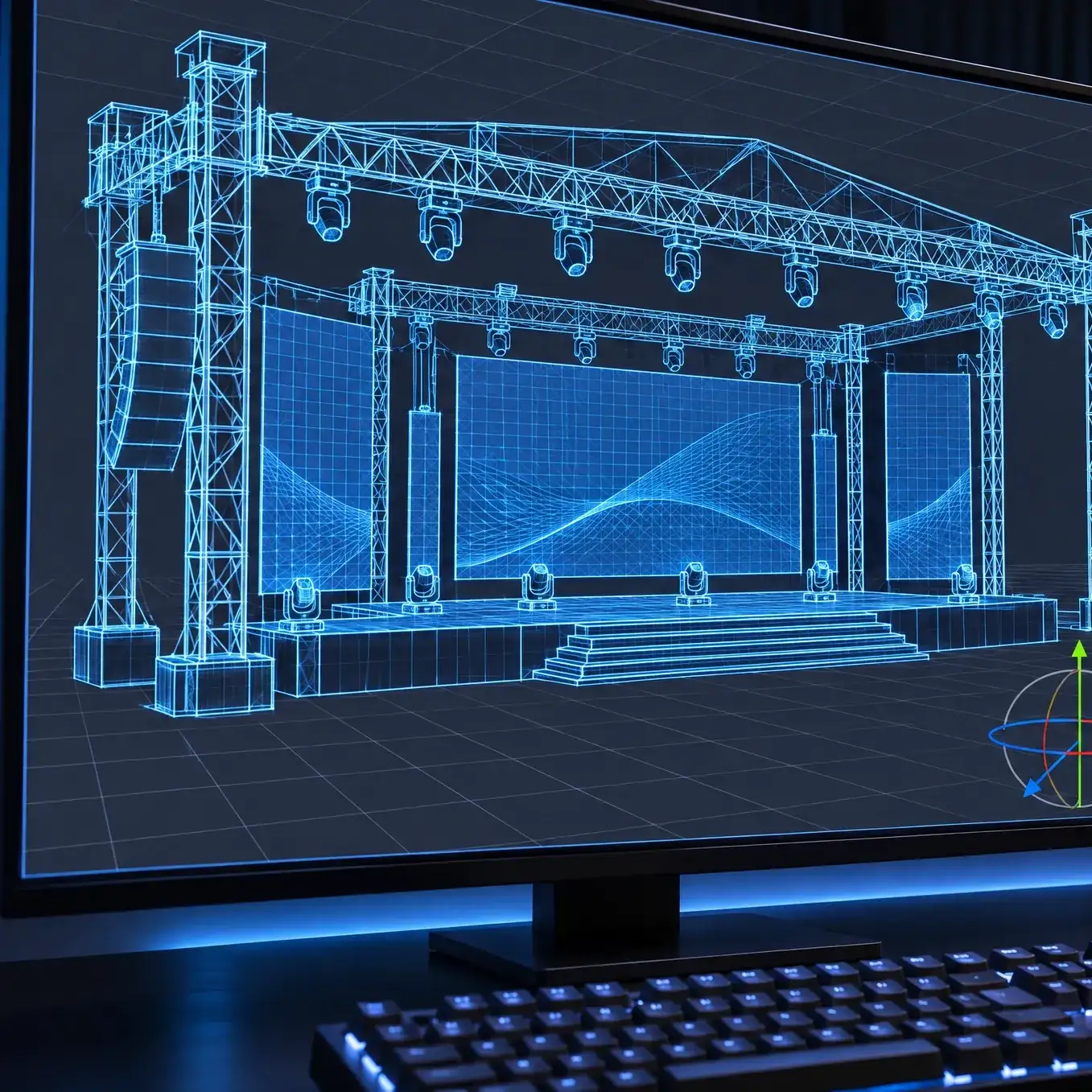
A rigged structure over a working exhibition floor
The rigging drawing and its weight calculation were worked out for a hall with exhibitors already in it, which is why the schedule puts the rigging call at night.
A build planned around a working floor
Load-in at night, then setup and a full show dry run before the first show day, so the stage was proven before the first session.
One crew across every discipline
SW's riggers, loaders and technicians in video, lighting, audio and camera worked as one team through the three show days.
The same stage, year after year, re-engineered each time
It was back again in 2024, with its own rigging drawing for the same hall, which is what a returning build actually looks like: the room does not change, the show does, and the load has to be worked out again.

03 / The Outcome
A Stage That Ran to the Show's Schedule.
A floor that never closes, and a cue plan that put twenty-two sessions across three days onto a panoramic wall, two side screens and a teleprompter, with the broadcast fitted around the show's schedule rather than the other way round. The show reported $19.2 million in economic impact for that edition, which is the show's own published figure. A stage that ran to the show's schedule, on a floor that never closed.
Twenty-two sessions. Three days. A floor that never closed.
Twenty-two sessions went to air.
The floor never paused for one.
Planning something like this?
Every event has a start time.
We make sure the technology is ready when it does. Tell us the date, the room, and what has to happen in it. You get a plan and a number back, from the people who would run it.
One of more than 4,000 events SW runs a year.